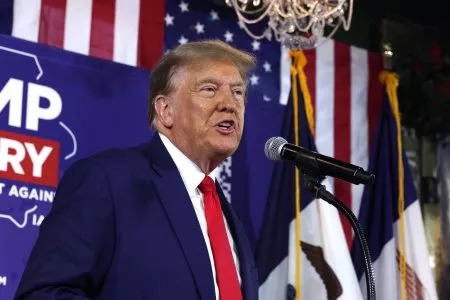
Former President Donald Trump is confronted with startling evidence in his ongoing legal battle over allegations of election fraud. The government has filed a Federal Rule of Evidence 404(b), outlining “other crimes, wrongs, or acts” that Trump is accused of but not formally charged with. As the trial unfolds, Chief Prosecutor Jack Smith is expected to emphasize Trump’s state of mind and awareness of the potential consequences of his claims, aiming to establish that Trump acted without a good faith belief in the aftermath.
Former federal prosecutor Joyce Vance, commenting on the case, suggests that the prosecution will rely on this rule, commonly used to demonstrate intent or knowledge. Vance cautions against straying into prohibited “bad character” territory, emphasizing the delicate balance needed in the prosecution’s strategy.
Evidence under Rule 404(b) is not allowed to establish “the character of a person” but can serve various purposes, including proving motive, opportunity, intent, preparation, plan, knowledge, identity, or absence of mistake.
Trump, indicted in August with four counts related to efforts to overturn the 2020 election results leading up to the January 6, 2021, Capitol riot, maintains his plea of not guilty. The charges include conspiracy to defraud the U.S. government and conspiracy to obstruct an official proceeding. These legal challenges are unfolding concurrently with Trump’s active pursuit of the Republican presidential nomination.
The federal rules mandate the prosecution to provide reasonable notice of such evidence ahead of the trial. Vance underscores that Rule 404(b) evidence cannot establish that a person acted in accordance with their character on a specific occasion, prohibiting the introduction of evidence suggesting a defendant’s general bad character or previous crimes as proof of guilt in the current charges.
As Trump faces multiple criminal cases, the legal proceedings coincide with his active campaign for the Republican presidential nomination. Despite the legal challenges, he pleads not guilty across all cases.
The unfolding trial will provide insights into the intricacies of proving intent and knowledge while navigating the limitations imposed by the federal rules of evidence. Vance’s insights highlight the complexity of proving Trump’s state of mind without delving into forbidden territory.
The former president’s legal battles unfold against the backdrop of his political ambitions, raising questions about the potential impact of these proceedings on his bid for the Republican presidential nomination. Chief Prosecutor Jack Smith faces the challenge of balancing the intricacies of evidence presentation under Rule 404(b) as he strives to build a compelling case without overstepping legal boundaries. The trial’s outcome could significantly influence the trajectory of Trump’s political future.