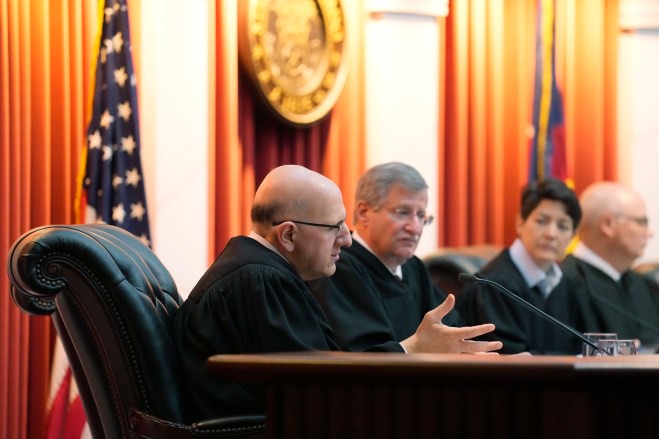
In a pivotal ruling on Tuesday, the Colorado Supreme Court, comprising appointed justices, stirred controversy by preventing the people of Colorado from casting their votes for former President Donald Trump in the upcoming 2024 presidential election. The decision, passed by a slim majority, has become a lightning rod for intense debate, raising questions about the balance between judicial power and democratic representation.
The unelected nature of the Colorado Supreme Court justices adds a layer of complexity to the ruling, as their authority to influence the electoral process is not directly derived from the voters. Critics argue that decisions impacting voters’ ability to choose their preferred candidates should face rigorous scrutiny to ensure alignment with democratic principles.
Led by four justices, the ruling has emerged as a focal point in the ongoing discourse about the intersection of law and democracy. The controversy surrounding the decision mirrors broader discussions about the role of the judiciary in shaping electoral outcomes.
The narrow margin by which the decision was reached intensifies the debate, suggesting a lack of unanimity among the justices. This dissent within the court adds complexity to the analysis of legal standards, raising implications for the perceived legitimacy of the decision itself.
According to CBS News, similar lawsuits challenging Trump’s candidacy have been filed in more than 25 states, highlighting the contentious nature of his political influence and efforts by various parties to shape the electoral landscape well in advance of the voting process.
As legal battles unfold in multiple states, the diversity of approaches and interpretations of election laws adds a degree of uncertainty to the 2024 electoral landscape. The cases against Trump’s candidacy reflect a broader trend of legal activism shaping political participation, leading to a complex mosaic of legal standards and precedents.
The Colorado Supreme Court’s decision is not an isolated incident but part of a larger pattern where legal challenges intersect with the democratic process. The ongoing debate invites a critical examination of the principles guiding electoral participation and the extent to which unelected bodies can influence voters’ choices.
This controversy in Colorado serves as a microcosm of the broader national conversation about the delicate balance between judicial authority and democratic representation. The outcomes of legal battles in various states are poised to set precedents and establish standards that could profoundly shape the landscape of future elections.