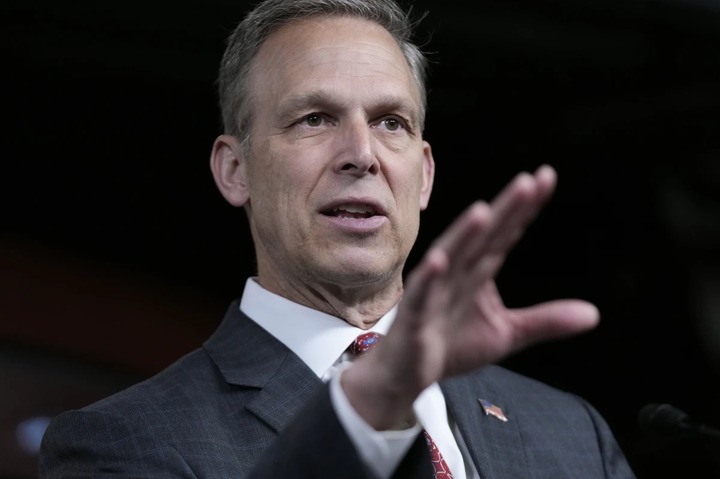
Federal Judge James Boasberg has compelled Republican Rep. Scott Perry, a staunch ally of former President Donald Trump from Pennsylvania, to disclose more than 1,600 previously undisclosed texts and emails. These digital communications, concealed for over a year, are believed to hold crucial information shedding light on Perry’s involvement in the aftermath of the 2020 election.
Perry’s personal cellphone, seized by federal authorities, now stands as a repository of digital trails that could potentially illuminate his role in influencing executive decisions and manipulating the transfer of power post the 2020 election, according to reports by the Associated Press News on Thursday, December 21.
Judge Boasberg’s decision, a delicate maneuver on the constitutional tightrope, acknowledges the constitutional protections afforded to legislative actions under the speech and debate clause. However, it brings into question the extent of those protections, laying bare the tension between legislative privilege and the public’s right to transparency.
Despite the constitutional complexities, 1,659 records have been unearthed, exposing Perry’s endeavors to influence executive decisions and participate in efforts to alter the trajectory of power. Perry’s lawyer, John Rowley, has staunchly defended his client, arguing that Perry’s actions were driven by a sense of duty to investigate election discrepancies on behalf of constituents and the nation.
Rowley, in response to the judge’s ruling, stated that they are reviewing their legal options and considering whether to appeal. He emphasized that Perry’s work was conducted in the service of his constituents, attempting to deflect any insinuation of impropriety.
Amidst the legal skirmish now thrust into the public eye, snippets of unsealed texts and emails have revealed Perry’s intricate role as a key player among Trump loyalists. His connection to Jeffrey Clark, a figure poised to reshape the Department of Justice, has become a focal point for federal prosecutors investigating potential attempts to challenge the Department of Justice’s findings of no widespread election fraud.
The unsealed records suggest Perry wasn’t a passive observer but a crucial ally in Clark’s bid to alter the course of the Justice Department’s stance on election fraud. Perry’s compliance with Trump’s request to introduce him to Clark is now viewed through a more nuanced lens.
The August indictment depicted Clark not as an incidental player but as a central figure in an alleged attempt to subvert the 2020 election. The clash over Clark’s elevation brought the Justice Department to the brink of crisis, with Trump eventually yielding in the face of potential mass resignations.
Clark, now labeled in the federal indictment as an unindicted co-conspirator, stands as a symbol of the turbulent forces that sought to reshape the democratic landscape. Perry, Chairman of the Freedom Caucus, finds himself navigating treacherous waters as the legal drama unfolds.
Perry’s cellphone, once a private device, has become a vessel carrying the weight of political intrigue, and as the courtroom drama emerges from the shadows, it casts a spotlight on the intricate dance between power, loyalty, and the pursuit of truth in the corridors of Washington, D.C.