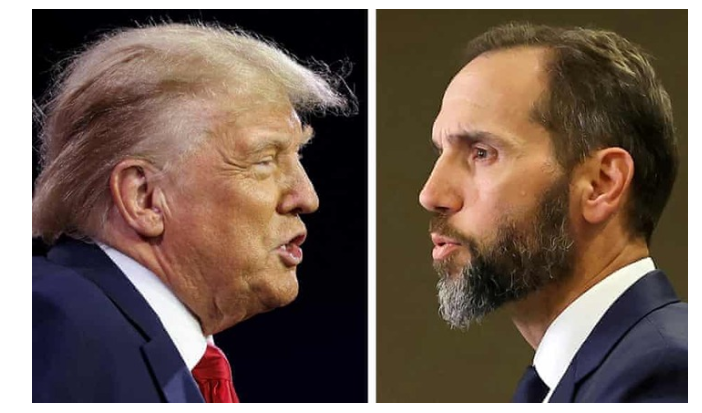
Former President Donald Trump’s legal team celebrated a victory as the U.S. Supreme Court declined Special Counsel Jack Smith’s request for an expedited review regarding Trump’s potential immunity from prosecution in a federal case linked to the 2020 election interference.
Alina Habba, Trump’s attorney, expressed contentment with the Supreme Court’s decision, emphasizing the significance of adhering to standard due process protocols.
In a report by Conservative Brief on December 26, 2023, Habba criticized Smith’s attempt to fast-track the case, arguing that it lacked urgency and aimed to bypass regular appellate procedures.
Habba praised the Supreme Court for upholding the concept of presidential immunity, asserting that such immunity exists to prevent legal pursuits against former presidents for political motives.
The defense strategy heavily relies on the claim of presidential immunity, especially following U.S. District Judge Tanya Chutkan’s dismissal of arguments asserting immunity from indictment. The proceedings are presently halted pending an appeal seeking a stay on the case.
Habba underscored the potential impact of ongoing legal challenges on Trump’s public image, suggesting that efforts to entangle him in court cases might be perceived as a political maneuver.
She argued that targeting Trump could potentially backfire and be viewed as an attempt to undermine the GOP and the Republican Party.
Notably, last week, attorneys representing former Attorney General Ed Meese and constitutional scholars filed a brief contending that Smith’s appointment as special counsel is unconstitutional.
They claimed that Smith’s representation of the United States lacks validity due to his lack of authority, asserting that Congress alone holds the power to create such positions, which hasn’t been exercised in this instance.
The amicus brief argued that Smith’s appointment violates the Constitution’s Appointments Clause, as Congress hasn’t established the position he currently holds.
It further challenged U.S. Attorney General Merrick Garland’s authority to make such an appointment, alleging that Garland appointed Smith to a non-existent office, lacking the necessary authority.
The legal argument posited that even if statutes could authorize the appointment of special counsels, Smith wasn’t properly appointed to such an office.
The attorneys contended that Smith’s authority should parallel that of a U.S. attorney, necessitating presidential nomination and Senate confirmation, which they claim didn’t occur.
This legal challenge adds complexity to the case, raising questions about the very legitimacy of the special counsel’s appointment.
The impact of this argument on ongoing legal proceedings and the broader narrative surrounding Trump’s alleged involvement in election interference remains uncertain.
While the Supreme Court’s denial of expedited review provides temporary relief to Trump’s legal team, the larger legal challenges and queries about the special counsel’s authority continue to shape the course of the federal case involving interference in the 2020 presidential election.