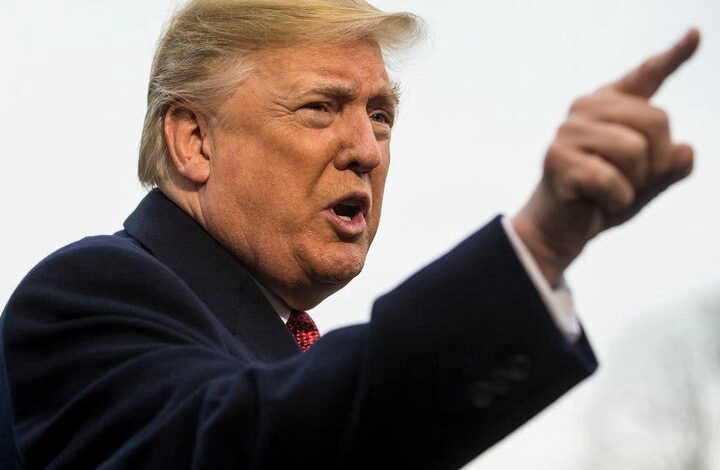
U.S. Constitution, Maine and Colorado have taken significant steps to bar former President Donald Trump from their respective 2024 presidential ballots.
Citing Trump’s alleged involvement in the January 6, 2021, Capitol riot, these states have interpreted constitutional implications differently, a report by Newsweek stated on Friday, December 29, 2023.
Following Colorado’s Supreme Court’s decision to remove Trump’s name from the general election ballot, Maine, on Thursday, similarly disqualified the former president from its March primary.
Despite neither state supporting Trump in the 2020 election, their combined 13 electoral college votes are crucial, which Trump aims to contest.
At the heart of the matter lies the interpretation of an insurrection under the U.S. Constitution.
Both states agree it involves a “public use of force,” but nuances in their definitions underscore varying perspectives.
Maine views insurrection as an act targeting “preventing the execution of the Constitution.”
Conversely, Colorado’s definition is more specific, encompassing attempts to “prevent the U.S. government from taking actions necessary for a peaceful transfer of power,” including the “threat of force.”
The impact of these decisions extends beyond Trump’s disqualification from state ballots.
With 13 electoral college votes in play, these rulings could sway Trump’s political future and shape the upcoming presidential election dynamics.
However, Colorado’s ruling faces opposition.
The state’s Republican Party promptly appealed to the U.S. Supreme Court, seeking an expedited process, citing a “severe, immediate, and ongoing threat to the… electoral process throughout the country.”
The outcome of this appeal could set a precedent for the broader understanding of insurrection and its implications for political eligibility.
This legal maneuver emphasizes the complexity of melding constitutional interpretation with contemporary political events.
Maine and Colorado’s divergent views underscore the challenge in establishing a unified understanding of constitutional principles, leading to legal disputes reaching the highest levels of the judiciary.
As the legal battle unfolds, the question of whether Trump’s alleged role in the Capitol riot constitutes an insurrection remains under intense scrutiny, dictating potential exclusion from future electoral participation.
Decisions by Maine and Colorado, coupled with the pending Supreme Court appeal, will undoubtedly shape Trump’s path and the fate of future political figures confronting similar legal challenges.
The intersection of constitutional interpretation and electoral politics remains a central focus amid post-January 6 repercussions, underscoring the evolving narrative.