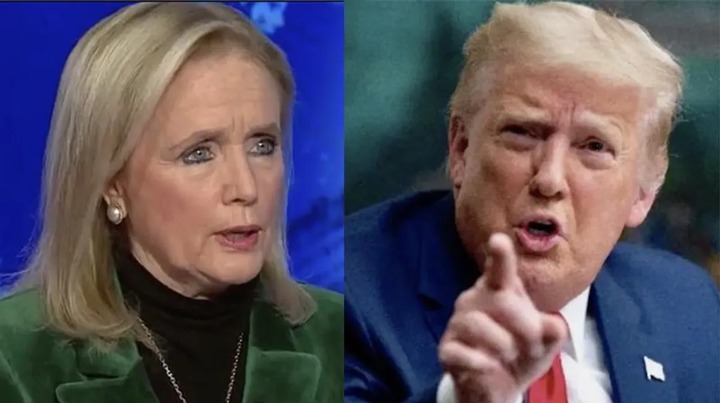
In a courageous response to what she describes as bullying tactics employed by former President Donald Trump, Congresswoman Debbie Dingell, a Democrat representing Michigan, shares her firsthand encounter with Trump’s vindictiveness. Dingell, who succeeded her late husband, former Rep. John Dingell, in Congress, recounts a troubling incident following her vote for Trump’s first impeachment, as reported by the Raw Story on December 30, 2023.
In an op-ed penned for the New York Times, Dingell reflects on Trump’s proclivity for cruelty, stressing the imperative to resist normalizing such behavior. She underscores the pain caused by Trump’s insensitive remarks, particularly when he insinuated that her late husband was in hell after her impeachment vote.
Dingell, despite expressing reluctance to engage in a fight with Trump, emphasizes the importance of not ignoring or normalizing hateful rhetoric. She criticizes Trump’s Christmas Day message on his Truth Social account, where he wished for his political opponents to “ROT IN HELL.”
Trump, in response to Dingell’s remarks, labeled her a “loser” and criticized her for not showing gratitude when he arranged funeral honors for her husband. This escalation resulted in Trump supporters showing up outside Dingell’s residence with assault weapons, shedding light on the tangible consequences of political animosity.
Undeterred, Dingell remains resolute in her refusal to be bullied or intimidated, especially as a woman facing such attacks. She encourages individuals facing similar situations to confront attacks, present alternative viewpoints calmly, and resist descending to the level of those attacking them.
Highlighting the real-world implications of Trump’s carefully chosen words and actions, Dingell contends that they contribute to anger, a lack of trust in institutions, and a threatening climate for democracy. She calls for vigilance, cautioning against the dangers posed by Trump’s deliberate rhetoric and actions, urging people to stand up to bullies.
Dingell advocates for consistently calling out the behavior of bullies and defending those they target. In addressing Trump’s supporters, she calls for de-escalation and presenting alternative viewpoints calmly, warning against succumbing to animosity and emphasizing the impact of premeditated words and actions on democratic institutions.
Dingell’s stance aligns with a broader call for a measured response to political attacks, emphasizing the importance of civil discourse and the defense of democratic principles. Her experience serves as a microcosm of the larger challenges faced by individuals in the political arena, where rhetoric and actions can have tangible consequences.
As Dingell continues to navigate the aftermath of Trump’s attacks, her message resonates beyond personal experience, touching on the broader issues of political polarization, the role of language in public discourse, and the imperative to safeguard democratic values. In a climate where inflammatory rhetoric can escalate tensions, Dingell’s call for resilience, courage, and a commitment to what is right becomes a rallying cry for those navigating the complex landscape of contemporary politics.