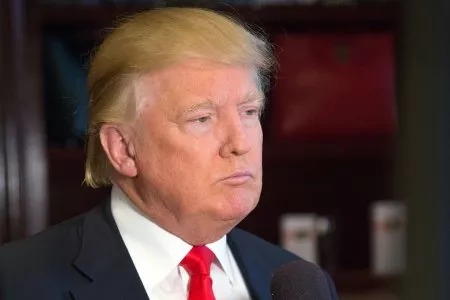
In a significant development in the legal saga surrounding former President Donald Trump’s alleged interference in the 2020 presidential election, a group of lawyers has presented a legal brief to the federal court of appeals, challenging Trump’s claim of presidential immunity. The lawyers argue that Trump cannot shield himself from trial based on a precedent set by the Supreme Court in 1989.
Accused of abusing his power by pressuring state officials to overturn election results and inciting the violent Capitol insurrection on January 6, 2021, Trump is slated to stand trial in Washington, D.C. in March 2024. Despite this, he seeks to dismiss the case, citing presidential immunity from criminal prosecution.
Nonprofit organization American Oversight, dedicated to government accountability, has submitted an amicus brief opposing Trump’s appeal. An amicus brief is a legal analysis filed by groups not directly involved in the case but with a vested interest in the outcome.
The Friday-filed brief references the Midland Asphalt ruling delivered by conservative Supreme Court Justice Antonin Scalia in 1989. The ruling posits that an interlocutory order in a criminal case is not immediately appealable unless it “rests upon an explicit statutory or constitutional guarantee that trial will not occur.”
Contrary to Trump’s claims, the brief argues that there is no explicit textual guarantee in the Constitution or any statute providing immunity from criminal prosecution. It contends that the Supreme Court has never recognized such broad immunity for presidents, emphasizing that allowing Trump to appeal would undermine the separation of powers and the rule of law.
“Applying Midland Asphalt, this court and other courts of appeals have long dismissed interlocutory appeals asserting claims of criminal immunity not based on an explicit textual guarantee,” states the American Oversight briefing.
Moreover, the brief challenges Trump’s reliance on the Nixon v. Fitzgerald ruling, asserting that it does not apply to criminal charges. It contends that Trump’s alleged actions were personal and political, not within the scope of his official duties.
“His actions were not motivated by the public interest but by his own self-interest,” the brief emphasizes.
Concluding, the brief urges the court to deny Trump’s appeal and advocates that he should face trial like any other citizen. It warns against setting a precedent that could enable future presidents to evade accountability, stating, “Allowing Trump to escape trial would not only reward his egregious misconduct but also invite future presidents to follow his example and undermine our democracy.”
The court of appeals is yet to decide whether to hear Trump’s appeal. If it proceeds, the case may eventually reach the Supreme Court, potentially resulting in disappointment for Trump, even from his own appointees.