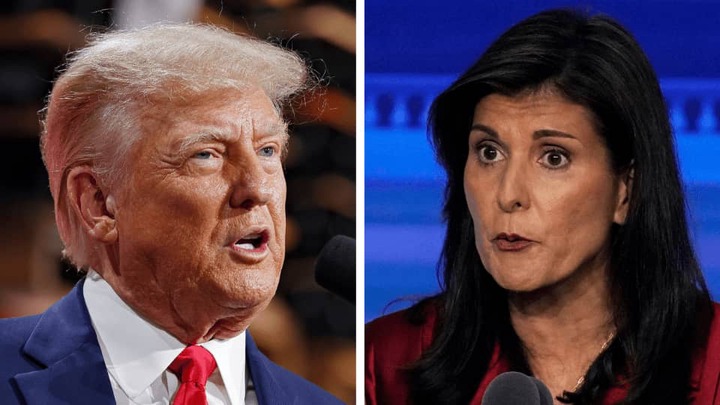
On Monday, January 22, 2024, former GOP presidential candidate Nikki Haley took center stage in the New Hampshire primary landscape, accusing ex-President Donald Trump of actively pursuing alliances with dictators throughout his tenure in the Oval Office.
Haley, now the last significant contender against Trump after Florida Gov. Ron DeSantis’ exit from the race, intensified her criticism during an exclusive interview with “Face the Nation” host Margaret Brennan. The accusations, ranging from concerns about Trump’s mental fitness to his relationships with foreign leaders, have added a new dimension to the ongoing Republican primary race.
During the candid interview, Haley shed light on what she perceives as Trump’s consistent affinity for leaders like North Korea’s Kim Jong Un and China’s Xi Jinping. The escalating attacks and counterattacks between Trump and Haley have shaped the discourse leading up to the pivotal New Hampshire primary.
In her role as U.S. ambassador to the United Nations during the Trump administration, Haley revealed instances where she advised against forging alliances with certain world leaders, citing her experience and concerns for the potential consequences of such relationships.
Drawing attention to a specific incident involving Russian President Vladimir Putin, Haley highlighted her efforts to dissuade Trump from what she deemed a problematic “bromance.” Notably, she emphasized the dire consequences of diplomatic approaches prioritizing personal relationships over strategic considerations, pointing to the tragic case of Otto Warmbier, an American student who died after imprisonment in North Korea.
Despite acknowledging the chaos that may follow Trump, Haley continued to maintain her stance on the former president’s questionable decisions and alliances. Criticizing Trump’s emphasis on “love letters” exchanged with Kim Jong Un, she stressed the need to focus on substantive issues.
As the 2024 presidential race intensifies and Haley emerges as a prominent GOP candidate, the dynamics of the campaign are marked by these explosive allegations and criticisms. The concerns raised about Trump’s diplomatic approaches and leadership style underscore the high stakes involved in the upcoming election.
Haley’s bold accusations reflect a broader debate within the Republican party about its future direction. With internal divisions and differing visions for its post-Trump identity, Haley’s critique challenges conventional Republican foreign policy norms and prompts a reassessment of the party’s stance on global leadership.
The strategic timing of Haley’s accusations, just days before the New Hampshire primary, adds a significant dimension to her messaging as she seeks to distinguish herself by critiquing Trump’s foreign policy decisions and presenting an alternative vision for the Republican party.