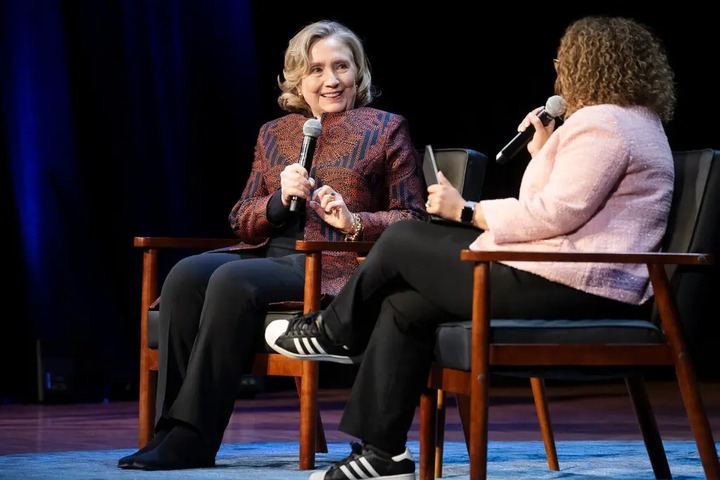
Hillary Clinton’s recent comments on Middle East history have ignited a storm on social media, drawing both support and criticism from various quarters.
In an interview on MSNBC’s “Morning Joe” show, Clinton took aim at young protesters, stating they lack knowledge about the region’s history. She noted that during her discussions with young people, she observed a general lack of awareness about the Middle East, as well as other global and domestic issues.
Clinton highlighted a missed opportunity in history, suggesting that if Yasir Arafat, the former Palestinian Authority leader, had accepted a deal brokered by her husband, President Bill Clinton, Palestinians might have had their own state today. She characterized Arafat’s rejection of the deal as a tragic historical moment.
These remarks came in response to a question from the show’s host, Joe Scarborough, about radicalization on college campuses.
However, Clinton’s comments faced criticism on social media, with some accusing her of underestimating students’ knowledge and oversimplifying complex geopolitical issues. Osamah F. Khalil, a history professor and Middle East expert at Syracuse University, labeled Clinton’s remarks as disingenuous, pointing out that Arafat had warned Bill Clinton about the unpreparedness of both sides before the Camp David summit in 2000.
Khalil argued that solely blaming Palestinians was unjust, stressing the need for patience and persistence in diplomatic efforts.
Clinton’s comments also brought attention to past protests against her, such as students walking out of her class at Columbia University and disrupting her visit to Wellesley College.
During her tenure as Secretary of State, Clinton was heavily involved in diplomatic endeavors aimed at resolving the Israeli-Palestinian conflict. Despite concerted efforts with international and regional partners, challenges including political divisions, security concerns, and territorial disputes persisted.
Clinton’s remarks underscored her concerns about youth understanding of the region’s complexities, emphasizing the need to learn from past diplomatic failures and strive for sustainable peace.
In summary, Clinton’s comments have sparked a broader discussion about historical perspectives, diplomatic challenges, and the ongoing quest for peace in the Middle East.