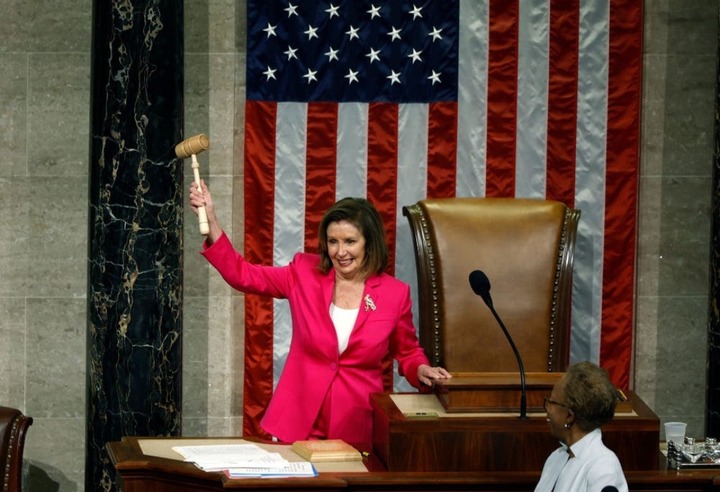
Former House Speaker Nancy Pelosi, known for her strong views and unwavering stance on democratic principles, found herself in the midst of controversy during a recent debate at the prestigious Oxford Union.
The debate, titled “This House Believes Populism is a Threat to Democracy,” provided Pelosi with a platform to express her concerns about the rising influence of populism in the United States. However, her assertions faced a sharp rebuttal from fellow debater Winston Marshall, a former member of Mumford and Sons turned podcast host, as reported by Fox News on Saturday, May 11, 2024.
Pelosi, a Democrat from California and self-described “devout” Catholic, wasted no time in voicing her apprehensions about the impact of populism on American democracy. She argued that certain segments of the population, whom she characterized as “poor souls looking for answers,” often reject Democratic solutions due to deeply entrenched beliefs regarding “guns, gays, [and] God.”
In her view, this refusal to consider alternative viewpoints poses a significant threat to the democratic fabric of the nation.
However, Pelosi’s assertions were met with skepticism and pushback from Marshall, whose counterarguments challenged the very premise of her stance.
Marshall, now known for hosting the “Marshall Matters” podcast for The Spectator, took a firm stance against the motion, disputing Pelosi’s characterization of populism as inherently anti-democratic.
Throughout the debate, Marshall asserted that populism, when properly harnessed, can be a crucial tool for democratic engagement and accountability. He argued that populism amplifies the voices of ordinary citizens and holds political elites accountable for their actions.
By dismissing populism as a threat, Marshall contended, Pelosi risked alienating a significant portion of the electorate and undermining the principles of inclusivity and representation.
The exchange between Pelosi and Marshall underscored the broader divide within American politics and the global discourse surrounding populism.
While Pelosi’s concerns reflect a growing unease among establishment figures regarding the rise of populist movements, Marshall’s rebuttal highlighted the nuanced nature of the populist phenomenon.
Populism has emerged as a potent force in contemporary politics, transcending traditional party lines and challenging established norms. Its appeal lies in addressing the grievances of disenfranchised communities and confronting entrenched power structures.
Yet, as Pelosi cautioned, populism can also be exploited by demagogues and authoritarian leaders to sow division and undermine democratic institutions.
The Oxford Union debate served as a microcosm of the ongoing debate over the role of populism in modern democracy.
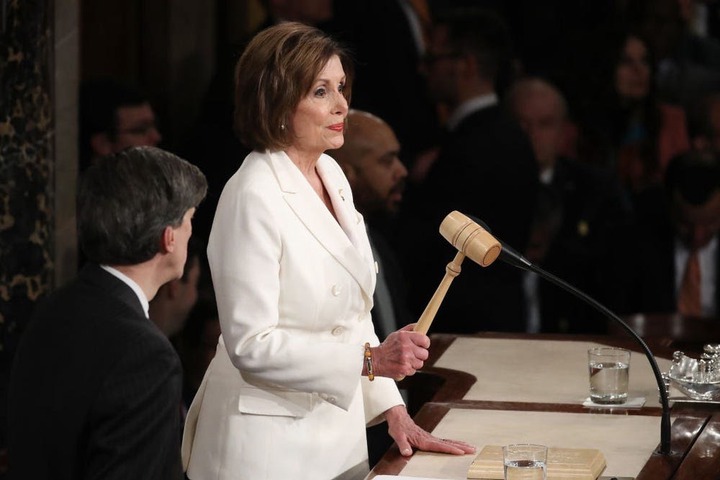
As the world grapples with political polarization and societal upheaval, the question of whether populism poses a threat or a promise to democracy remains hotly contested.
In the aftermath of the debate, both Pelosi and Marshall stood by their respective positions, further underscoring the depth of ideological division within contemporary political discourse.
While Pelosi reiterated her concerns about the dangers of populist rhetoric, Marshall reaffirmed his belief in the potential of populism to rejuvenate democratic participation and accountability.
As the United States and other nations navigate the complexities of an ever-evolving political landscape, the debate over populism and its implications for democracy is likely to remain at the forefront of public discourse.
Whether viewed as a harbinger of democratic renewal or a harbinger of democratic decay, one thing remains clear: the future of democracy hinges on our ability to grapple with the complex realities of populism in the 21st century.