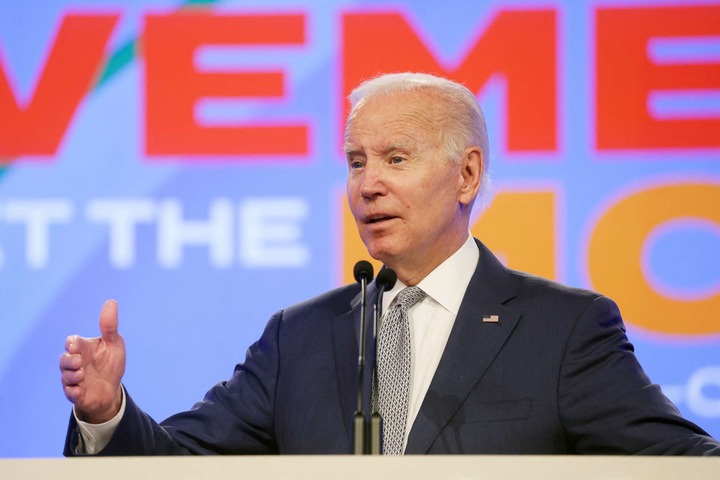
President Joe Biden’s goal of fostering national unity remains elusive as he faces re-election, nearly four years after pledging to end the deep partisan divisions in America. Despite his efforts, the political landscape is marked by ongoing hostility and entrenched tribalism.
Biden’s Unity Efforts
According to NBC News on Monday, May 20, 2024, Biden’s inaugural address in January 2021 centered on the theme of “unity.” He emphasized the need to overcome divides between red and blue states, rural and urban areas, and conservatives and liberals. However, as the nation approaches another presidential election, the divisions appear more pronounced than ever.
Decline in National Cohesion
A Vanderbilt University study on national unity highlights a steady decline in cohesion since the early 1980s, with only a minor improvement when Biden first took office. This slight uptick was attributed to a decrease in the number of people who strongly disapproved of Biden compared to Trump, according to John Greer, the professor behind the study.
Challenges and Strategies
Biden’s allies maintain that he hasn’t given up on the hope of bipartisan cooperation. If re-elected, Biden may consider appointing Republicans to Cabinet positions and redoubling efforts to reduce political toxicity. However, the political climate remains challenging. In a recent focus group, a former Biden voter from Georgia expressed disappointment, stating that she had hoped for less division but now plans to switch back to Trump due to increased polarization.
Continued Influence of Trump and the Far Right
Democrats had anticipated that the far-right movement within the Republican Party would subside after Trump was voted out of office in 2020. However, Trump and his supporters continue to hold significant influence. Trump is running nearly even with Biden in national polls, and his allies occupy prominent positions in Congress.
Potential for Political Violence
The potential for further political violence looms, with concerns that a Trump defeat could lead to unrest similar to the events of January 6, 2021. Trump himself has not ruled out the possibility of violence from his supporters if he loses in November, stating that it would depend on the perceived fairness of the election.
Biden’s Legislative Successes and Bipartisanship
Despite these challenges, Biden’s supporters argue that he is uniquely positioned to bridge the partisan divide. They cite his legislative successes, such as securing aid for Ukraine, as evidence that cross-party deals are still possible. If re-elected, Biden could potentially ease polarization by appointing Republicans to high-profile positions in his administration, a strategy partially employed by former President Obama.

Criticism and Missed Opportunities
Critics argue that Biden missed opportunities to promote bipartisanship and that his administration’s efforts to hold Trump accountable for alleged crimes have exacerbated tensions. Former House Speaker Kevin McCarthy and other Republicans believe that Biden’s policies, particularly on issues like student loan forgiveness, reflect pressure from the left-wing faction of the Democratic Party, limiting his ability to negotiate with Republicans.
Increasing Partisan Animosity
A Pew Research Center study found that partisan animosity has intensified, with increasing numbers of Republicans and Democrats viewing each other as immoral. To address this, some suggest structural changes in governance, such as expanded representation in Congress to include smaller parties, as seen in Germany and New Zealand.
Commitment to Unity
Biden’s commitment to national unity remains steadfast. If granted a second term, he aims to continue efforts to defuse partisan tensions and foster cooperation across party lines, a goal that could define his legacy as he leaves office.
Conclusion
As the 2024 election approaches, President Biden’s challenge to unite the country becomes more pressing. Despite the hurdles, his resolve to bridge the partisan divide and achieve national unity remains a central theme of his administration. Whether Biden can turn this aspiration into reality will be a defining element of his presidency and legacy.