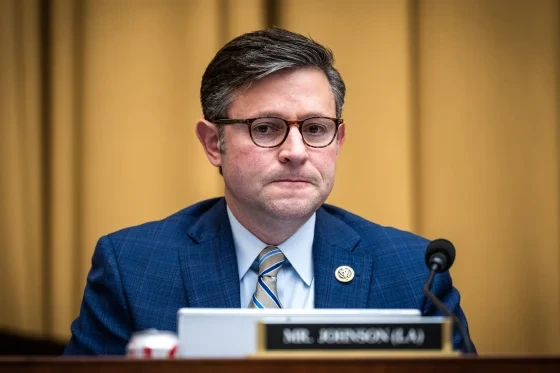
House Speaker Mike Johnson, a prominent Republican figure, is facing intense scrutiny for his involvement in efforts to overturn President Joe Biden’s 2020 election victory. Despite his lower-profile role in the attempt to challenge the election results, Johnson’s position as the new Speaker of the House has raised significant questions about his past actions and the strategies employed by those seeking to dispute the election outcome.
The controversy surrounding Johnson’s election as Speaker comes in the wake of a unanimous decision by House Republicans, a move that has sparked widespread debate within political circles. Johnson, previously associated with the election denial stance, has been a divisive figure among GOP lawmakers. His past alignment with the election denial movement was once considered by some within the party as disqualifying for leadership positions. However, the unanimous backing he received signals a shift in the GOP’s approach to controversial views within its ranks.
Johnson’s lower-profile but significant role in challenging the 2020 election results has brought his election denial stance into sharp focus. Critics argue that elevating someone with a record of election denial to a position of such prominence could have far-reaching implications for the party and the democratic process. Scrutiny on his record includes an examination of his statements, actions, and voting history related to election integrity and legitimacy.
Supporters of Johnson contend that his qualifications and abilities as a leader should not be overshadowed by his election denial stance. They believe that his past should not define his ability to lead effectively. However, opponents fear that his election denial stance could undermine the integrity of the democratic system and erode public trust in the electoral process.
The controversy surrounding Johnson’s election has stirred diverse reactions within the political landscape. Some see his appointment as a signal of the GOP’s evolving stance on election denial, highlighting a shift in the party’s approach to controversial views within its ranks. Others view it as a concerning indication of the party’s direction, raising questions about the future of the GOP in the post-2020 political landscape.
As Johnson assumes the role of House Speaker, he faces challenges that include demands from the caucus’ hardline members and the reality that no law can be passed without bipartisan support. His decisions and actions in this position will undoubtedly be closely monitored, not only by his fellow lawmakers but also by the American public, as they contemplate the implications of his election denial stance on the democratic fabric of the nation.