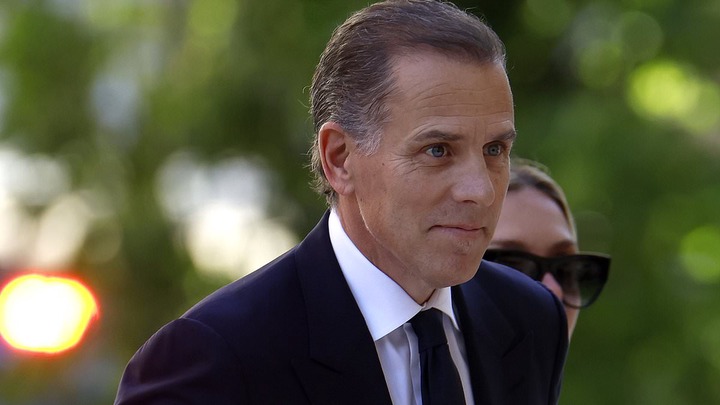
Renowned lawyer Alan Dershowitz recently made waves with his statement asserting that neither Hunter Biden nor Donald Trump deserved to be prosecuted, highlighting broader concerns about the state of American jurisprudence. This sentiment, echoed by an increasing number of observers, sheds light on a troubling trend where legal actions seem to prioritize the identities of individuals over the crimes they may have committed.
Dershowitz’s critique, reported by NEWSMAX on June 11, 2024, underscores the perception that legal proceedings are increasingly influenced by political affiliations rather than objective assessments of legality. Hunter Biden, son of President Joe Biden, has faced intense scrutiny over his business dealings and personal conduct, with critics arguing that the focus on him is more about political targeting than genuine legal concerns.
Similarly, former President Donald Trump has encountered a barrage of legal challenges, with his supporters decrying these actions as part of ongoing political vendettas rather than genuine pursuits of justice. The contention is that both Biden and Trump are being prosecuted not for their actions but for their political associations and stances.
Dershowitz’s commentary reflects broader worries about the erosion of impartiality in the legal system, where justice should be blind to political considerations. The danger of politicized prosecutions is not just the damage to individual reputations but also the undermining of public trust in legal institutions and the rule of law itself.
In a polarized America, where justice is increasingly perceived as a tool for political gain, restoring faith in the legal system becomes imperative. The focus must shift back to evidence-based prosecutions and adherence to the principles of equal justice under the law, regardless of one’s political standing.
Ultimately, the cases of Hunter Biden and Donald Trump serve as poignant reminders of the need to uphold the integrity of the legal system and ensure that justice remains blind to political affiliations. Only then can the foundational principles of fairness, impartiality, and respect for the law be truly upheld in a democratic society.