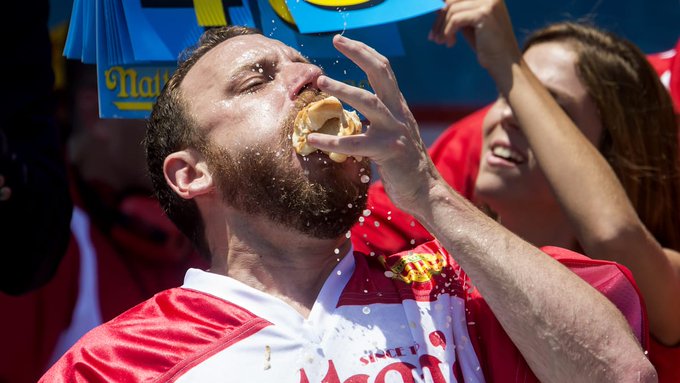
Annual Nathan’s Hot Dog Eating Contest, a Fourth of July tradition, is making headlines this year for controversial reasons. The event, known for its competitive eating spectacle, has barred reigning champion Joey Chestnut from participating due to a dispute over his sponsorship deal with a vegan food company.
Chestnut, a renowned competitive eater and record-holder for consuming the most hot dogs in a single contest, had secured a sponsorship deal with a vegan food brand, which clashed with the event’s long-standing association with traditional meat-based hot dogs.
Organizers of the Nathan’s Hot Dog Eating Contest, faced with this sponsorship conflict, made the decision to exclude Chestnut from this year’s competition, citing the event’s historical ties to the hot dog industry and its promotion of meat-based products.
The move has sparked a debate about the intersection of sports, sponsorship, and dietary preferences. Supporters of Chestnut argue that his exclusion sets a concerning precedent for athletes and their ability to pursue diverse sponsorship opportunities. They also point out that competitive eating should focus on skill and performance rather than sponsorship affiliations.
On the other hand, critics argue that the Nathan’s Hot Dog Eating Contest has a tradition and brand image to uphold, which includes promoting hot dogs as the centerpiece of the competition. They suggest that allowing Chestnut to participate under a vegan sponsorship would dilute the event’s identity and messaging.
The controversy has reignited discussions about the evolving landscape of sports sponsorship and the increasing diversity of athletes’ endorsements. It also raises questions about how sporting events navigate conflicts between commercial interests, tradition, and individual athlete preferences.
As the debate rages on, fans of competitive eating eagerly await the resolution of this dispute and the outcome of this year’s Nathan’s Hot Dog Eating Contest, which promises to be as eventful off the table as it is on.