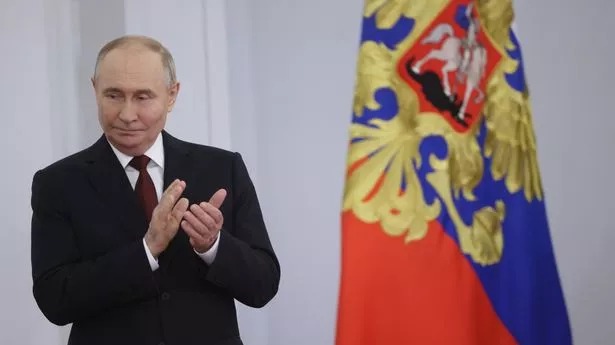
Ukrainian President Volodymyr Zelenskyy has vehemently rejected Vladimir Putin’s recent “ultimatum” for a ceasefire, likening it to Adolf Hitler’s aggressive demands that precipitated World War II. Zelenskyy asserts that Putin’s proposal is a deceptive ploy aimed at territorial expansion and global dominance.
Putin’s Demands for Ceasefire
On Monday, Putin proposed an immediate ceasefire in Ukraine, conditional on Kyiv withdrawing troops from four regions annexed by Russia in 2022 and renouncing its ambitions to join NATO. Zelenskyy dismissed this as an ultimatum, refusing to cede more territory and likening Putin’s tactics to those of Hitler, who made similar demands before launching invasions across Europe.
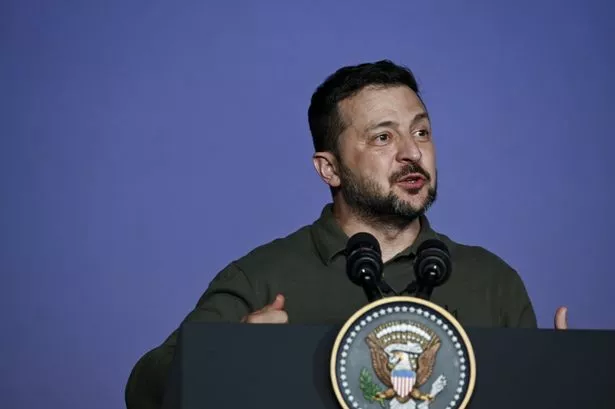
Historical Parallels
In a pointed comparison, Zelenskyy recalled Hitler’s demands in 1939, which included a 16-point list of demands to Poland. These demands were framed as a peace proposal but led to the invasion of Poland and the start of World War II. Similarly, Zelenskyy argues that Putin’s demands are a guise for further aggression.
International Reactions and Diplomatic Efforts
World leaders gathered in Switzerland to discuss steps towards peace in Ukraine, excluding Moscow from the talks. Concurrently, the Group of Seven (G7) leaders met in Italy, where the U.S. and Ukraine signed a 10-year security agreement. Russian officials, including Putin, dismissed the agreement as “null and void.”
Ukraine’s Foreign Ministry condemned Putin’s proposal as “manipulative” and “absurd,” aimed at misleading the international community and undermining diplomatic efforts for a just peace. Kyiv insists on the withdrawal of Russian forces, restoration of Ukraine’s territorial integrity, accountability for war crimes, and reparations from Moscow.
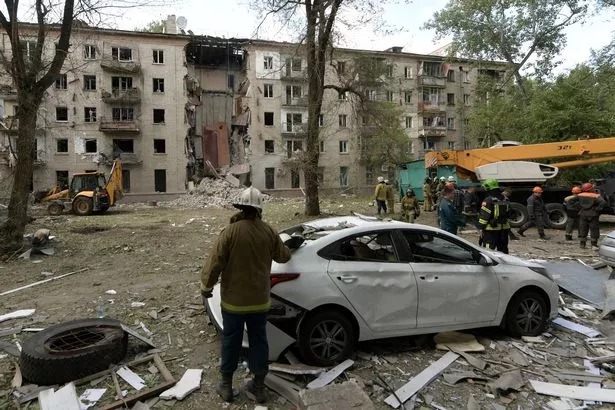
Broader Demands for Peace
Putin’s speech at the Russian Foreign Ministry outlined broader demands, including Ukraine’s recognition of Crimea as part of Russia, maintaining a non-nuclear status, and lifting Western sanctions against Russia. He framed these demands as necessary for a “final resolution” of the conflict, rather than merely freezing it.
Zelensky’s Firm Stance
Zelenskyy, addressing the G7 summit, reiterated his refusal to compromise on Ukraine’s territorial integrity. He argued that Putin’s proposal is not a genuine peace offer but a strategic move to avoid the costs of the ongoing conflict and to prolong it under new terms. Mykhailo Podolyak, Zelenskyy’s adviser, echoed this sentiment, describing Putin’s proposal as a “complete sham” with no real intention to end the war.
Zelenskyy’s firm rejection of Putin’s ceasefire ultimatum underscores the deep mistrust between Kyiv and Moscow. By drawing parallels to Hitler’s tactics, Zelenskyy highlights the potential dangers of appeasing aggressive demands, reinforcing Ukraine’s resolve to resist any attempts at coercion or territorial concessions. As diplomatic efforts continue, the international community remains wary of Putin’s intentions and committed to supporting Ukraine’s sovereignty and security.