A recently leaked memo from a group of State Department staff has caused a big stir in the Biden administration. In the memo, they criticize President Joe Biden for his support of Israel and call for the U.S. to publicly condemn Israel’s actions in the ongoing conflict with Hamas. This revelation has triggered a heated debate about U.S. foreign policy in the Middle East.
The leaked memo, which was obtained by Politico and reported by the Daily Caller on November 6, 2023, highlights a deep division within the Biden administration over how to handle the Israel-Hamas conflict.
While the administration has publicly backed Israel, this memo reveals that some staffers are pushing for a different approach. They argue that the U.S. should publicly criticize Israel for alleged violations of international norms, including attacks on non-military targets. The memo also calls for the White House to express its concerns about Israel’s treatment of Palestinians, a position that is typically kept private.
The memo takes issue with Israel’s alleged support for settler violence, illegal land seizures, and the use of excessive force against Palestinians. According to the memo, failing to address these issues publicly damages the U.S.’s reputation as an impartial player in the region, potentially harming U.S. interests worldwide.
The Biden administration has strongly supported Israel’s right to defend itself against Hamas, which the U.S. government considers a terrorist group. However, the leaked memo emphasizes a significant internal disagreement. While recognizing Israel’s legitimate right to protect its citizens, it strongly criticizes the loss of civilian lives in the conflict.
The content of the memo and its leak have raised crucial questions and sparked a broader discussion about U.S. foreign policy. It reveals a clear divide within the Biden administration, with some advocating for a more critical and public approach to Israel’s actions.
This internal division sheds light on the challenges of managing foreign policy in a region with deep historical and political tensions. It underscores the difficulties the Biden administration faces in balancing its commitment to traditional allies like Israel with concerns for the well-being of the Palestinian population.
The Middle East conflict is marked by long-standing historical and political grievances, making it tough to find a balanced approach that garners international support.
In response to the memo leak, the Biden administration must navigate this internal division while maintaining a consistent foreign policy stance. How they handle this situation could have significant implications for their foreign policy objectives in the Middle East and their global standing.
This development also affects the broader conversation about the Israeli-Palestinian conflict, highlighting the ongoing debate about U.S. support for Israel and the Palestinian cause.
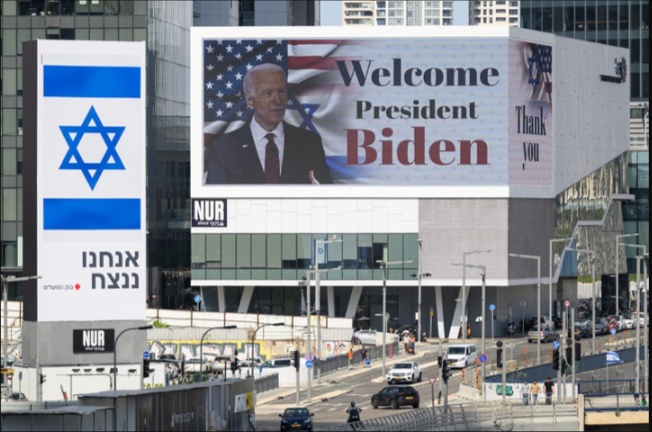
As the dust settles on this controversial leak, it remains to be seen how the Biden administration will handle the internal disagreement and external pressures to articulate a clear foreign policy on the Israel-Hamas conflict. The leaked memo has undeniably impacted President Biden’s pro-Israel image, leaving his administration with a challenging task as they grapple with the complexities of the Middle East and international diplomacy.