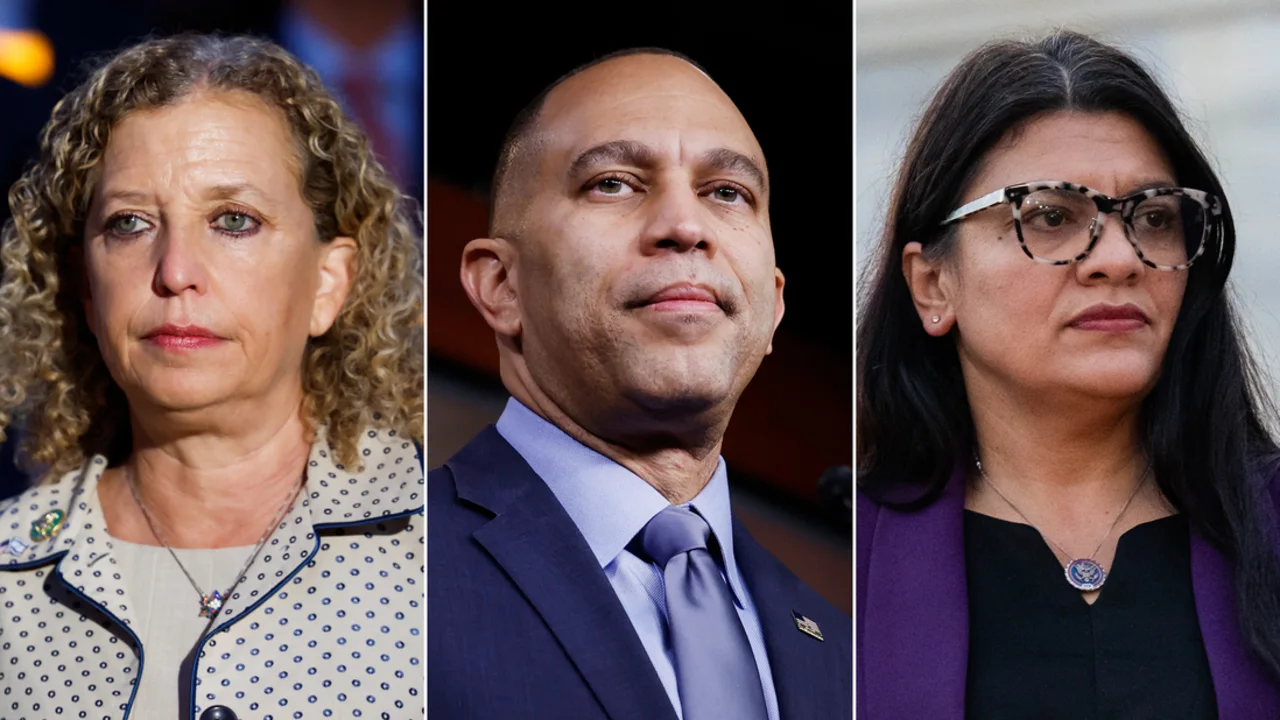
In a heated internal debate within the House Democratic Caucus, tensions reached a boiling point over members’ differing views on Israel’s conflict with Hamas. The controversy was ignited by Representative Debbie Wasserman Schultz of Florida, who sharply criticized fellow Democrats opposing a resolution expressing support for Israel’s fight against Hamas.
Wasserman Schultz, a prominent Jewish member, stirred controversy when she stated, “Someone who votes against this, I would think, doesn’t have a soul,” during an interview with CNN. Her remarks resonated deeply, especially with the 15 House Democrats who didn’t support the resolution. Notably, all these dissenting members were people of color, some of whom identified as Muslim-Americans.
Among those dissenting, Representative Pramila Jayapal of Washington state, the leader of the Congressional Progressive Caucus, abstained from voting on the resolution due to its omission of the loss of innocent Palestinian lives and the urgent need for humanitarian aid. She voiced her frustration, emphasizing the unresolved tensions within the Democratic leadership: “We’re still working on it.”
The internal conflict concerning Wasserman Schultz’s comments is just one manifestation of the broader divisions within the House Democratic Caucus over the Israel-Hamas conflict. This schism has exposed ideological, generational, and racial fault lines among the party members. Despite efforts by Democratic leaders to contain the discord, internal clashes persist, illustrating the complexity of the issue.
The tensions escalated further when 22 Democrats, including some progressives, joined Republicans in censuring Michigan Democratic Representative Rashida Tlaib, a Palestinian American, for her use of a phrase interpreted by some as a call for the destruction of Israel. Tlaib’s supporters condemned the censure, with Representative Cori Bush of Missouri denouncing it as a threat to Black and Brown members.
Amid this turmoil, Wasserman Schultz faced scrutiny from the Congressional Black Caucus, who pointed out the racial implications of her remarks, comparing them to historical justifications for slavery. Wasserman Schultz acknowledged the unintended connotations but declined to comment further on private conversations.
The conflict within the House Democratic Caucus reflects the broader divide among Democratic voters over President Joe Biden’s handling of the Israel-Hamas crisis and his unwavering support for Israel. While some Democrats unequivocally back Israel, others, particularly progressives, have grown critical of Israel’s offensive against Palestinian civilians. They are increasing pressure on the Biden administration to advocate for a ceasefire and address the humanitarian crisis.
House Democrats remain divided over the White House’s approach to the conflict, with some aligned with the administration’s pro-Israel stance and others urging the U.S. to pressure Israel for restraint. This internal discord threatens to impact the party’s unity and, potentially, the upcoming elections.
Amid these challenges, House Minority Leader Hakeem Jeffries has attempted to mediate between different factions, emphasizing the need for respectful dialogue. He condemned ad hominem attacks against colleagues and advocated for a just and lasting peace between Israel and the Palestinian people.
As the Democratic Party navigates these complex internal dynamics, its ability to address the ongoing crisis and work towards a peaceful resolution remains uncertain. The divisions within the party not only reflect the complexities of the Israel-Hamas conflict but also underscore the challenges faced by the Democratic leadership in maintaining cohesion amid contentious issues.