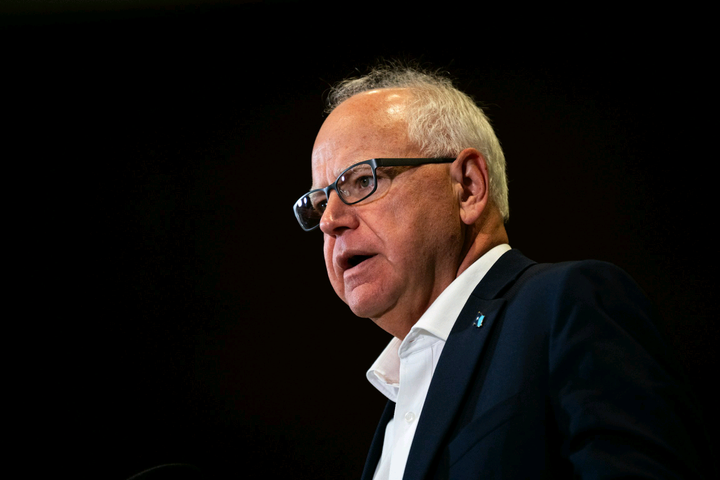
Minnesota Governor Tim Walz has ignited a firestorm of controversy with a recent statement perceived by many as a threat to constitutional freedoms. Known for his progressive policies, Walz’s comments about free speech and misinformation have drawn sharp criticism from various quarters.
In a video released on August 7, 2024, Walz, who has been selected by Vice President Kamala Harris as her running mate, faced backlash for his handling of previous contentious issues. His record includes criticism for his response to the George Floyd riots in Minneapolis in 2020, where he was accused of failing to deploy the National Guard in a timely manner.
Walz has also supported several divisive policies, such as driver’s licenses for undocumented immigrants, sanctuary cities, gender-affirming care for minors, and unrestricted abortion access. However, it is his latest comments that have provoked a significant reaction.
During a December 2022 appearance on MSNBC’s “The ReidOut,” Walz was asked about the Democratic response to election misinformation. His response alarmed many: “I think we need to push back on this. There’s no guarantee to free speech on misinformation or hate speech, especially in our democracy.”
Critics argue that Walz’s interpretation of the First Amendment is problematic. The Constitution does not include “hate speech” as a limitation on free speech, and while misinformation is a contentious issue, it is also protected under the First Amendment. Walz’s comments suggest a readiness to suppress speech that questions or criticizes Democratic policies and election outcomes, which many see as a dangerous infringement on constitutional rights.
The broader implications of Walz’s stance could be significant. If a Harris-Walz administration adopts such a viewpoint, there could be increased censorship of conservative media and voices. Outlets like The Gateway Pundit, which frequently challenge mainstream narratives and Democratic policies, worry that they might become targets under new regulations aimed at curbing misinformation and hate speech.
The controversy underscores a growing divide in American politics regarding the limits of free speech and the role of government in regulating information. Supporters of stricter controls argue they are necessary to ensure a fair and informed electorate, while opponents view them as a slippery slope toward authoritarianism.
The debate over free speech and misinformation is far from new, but Walz’s comments have intensified the discussion. His critics see his stance as an existential threat to the First Amendment, while his supporters argue it is a crucial measure to protect democracy from harmful falsehoods.
As the political landscape evolves, Walz’s position—especially if he becomes Vice President—will likely keep the debate over free speech and government regulation at the forefront of American politics.