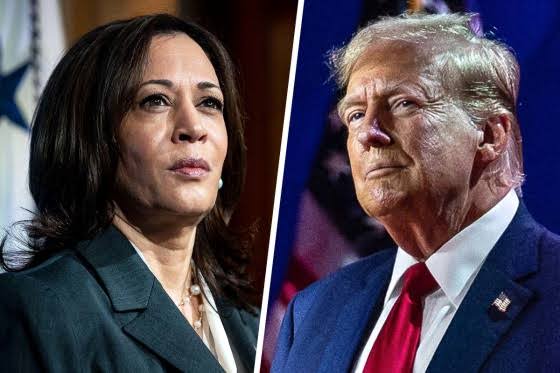
Prominent Republicans have publicly endorsed Vice President Kamala Harris for the 2024 presidential election, marking a significant blow to former President Donald Trump’s campaign.
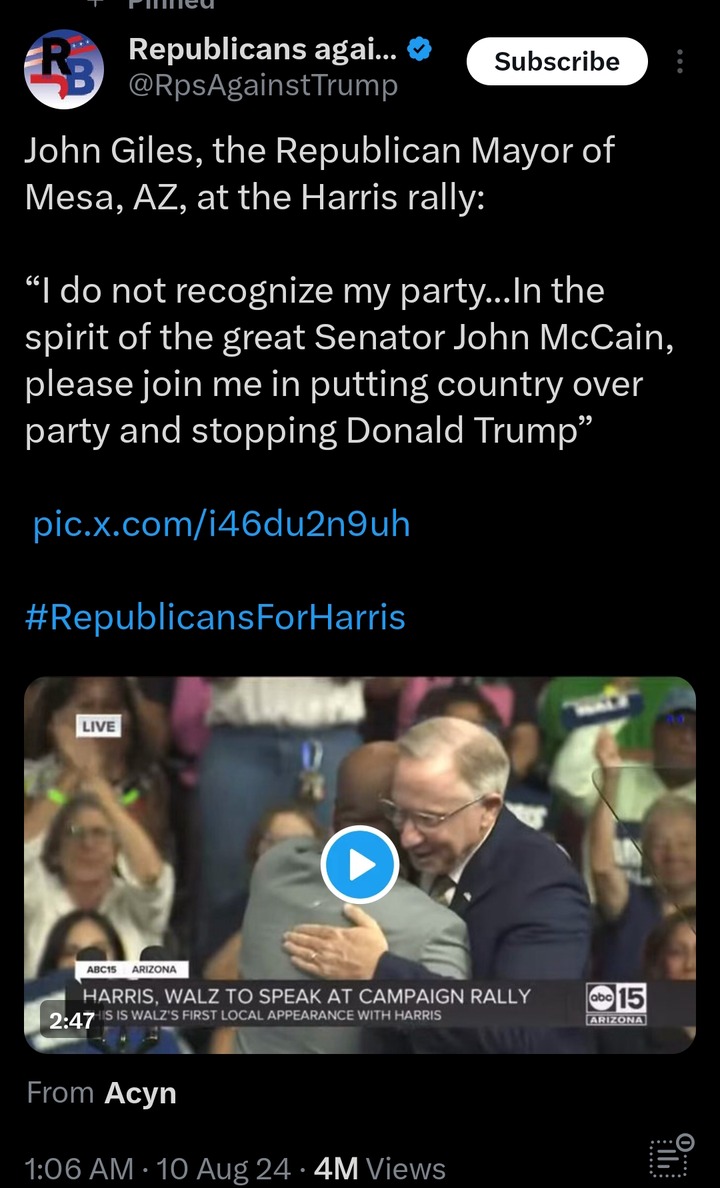
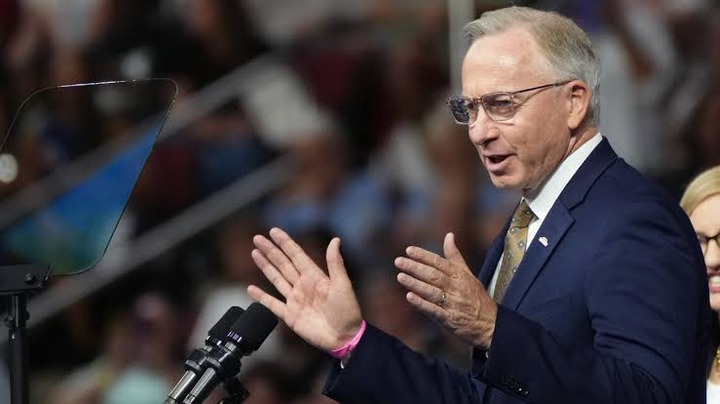
During a Harris rally on August 10, 2024, John Giles, the Republican Mayor of Mesa, Arizona, declared his support for Harris, stating, “I do not recognize my party…In the spirit of the great Senator John McCain, please join me in putting country over party and stopping Donald Trump.” Giles, a lifelong Republican, voiced his dissatisfaction with the current state of the GOP, describing it as “out of touch” and dominated by extremists.
Giles’s endorsement is part of a broader movement called “Republicans for Harris,” which has garnered support from over twenty Republicans across the nation. This coalition aims to attract voters skeptical of Trump, including former governors, members of Congress, and even ex-Trump administration officials. Among the notable endorsements are former Republican Gov. Bill Weld of Massachusetts, former Rep. Denver Riggleman of Virginia, and Stephanie Grisham, who served as White House press secretary under Trump.
The Harris campaign has strategically focused on winning over Republican voters, particularly in swing states, by appointing state political directors to lead outreach efforts in their regions. This initiative follows President Joe Biden’s unexpected withdrawal from the presidential race, which has significantly boosted Harris’s support, leading to record-breaking donations and improved polling numbers.
Despite Harris’s early momentum, the 2024 race remains highly competitive, with both her and Trump locked in a statistical tie. The endorsements from former Trump administration officials are especially noteworthy, as they risk backlash from Trump, who has already expressed his discontent on social media, calling for a purge of party members supporting opposing candidates.
Austin Weatherford, the national director of Republican outreach for the Harris campaign, emphasized that their efforts focus on earning the trust of Republicans concerned about defending democracy and restoring decency. The campaign’s strategy appears to resonate with some GOP figures, as evidenced by Chuck Hagel and Ray LaHood, Republican cabinet members during Barack Obama’s presidency, joining the “Republicans for Harris” coalition.
In Arizona, a key battleground state, several prominent Republicans have publicly endorsed Harris over Trump, including former Arizona state representative Robin Shaw and former Scottsdale Mayor Sam Campana. However, these endorsements come with risks, as Republicans opposing Trump have faced primary challengers, negative ads, and even death threats.
Mayor Giles expressed confidence that Harris would advocate for middle-class Americans, ensure billionaires pay their fair share of taxes, and work to secure the southern border. He also believes that Harris would collaborate with Republicans in Congress to address the broken immigration system through legislative means. Robin Shaw, who admitted to voting for Trump in the past, expressed regret and vowed not to support him again.
The growing number of Republican endorsements for Harris highlights the deepening divide within the GOP and the concerns many party members have about Trump’s potential return to the White House. It also underscores the Harris campaign’s strategy to appeal to moderate and disaffected Republican voters seeking an alternative to Trump.
As the 2024 election approaches, the impact of these high-profile endorsements on the broader Republican electorate remains uncertain. However, they undoubtedly present a challenge for Trump’s campaign and signal a potential shift in the political landscape. The “Republicans for Harris” initiative may also serve to legitimize Harris among voters who might otherwise hesitate to support a Democratic candidate.
With the election still months away, both campaigns are likely to intensify their efforts to win over undecided voters and solidify their base support. The endorsements from Republican figures could potentially sway moderate voters in key swing states, where the margins of victory are often razor-thin.
As the campaign progresses, it will be crucial to monitor how these endorsements influence public opinion and whether they lead to a significant shift in party allegiances. The 2024 presidential race is shaping up to be one of the most closely watched and potentially transformative elections in recent American history. With Republicans crossing party lines to support Harris, the traditional political landscape appears to be undergoing a significant realignment.
The coming months will reveal whether this trend continues to grow or if Trump can consolidate support within his party despite these high-profile defections. Regardless of the outcome, the willingness of prominent Republicans to publicly endorse a Democratic candidate marks a notable moment in American political history. It reflects the deep divisions within the GOP and the ongoing debate about the party’s future direction.
As election day draws nearer, the impact of these endorsements on voter behavior and the overall trajectory of the campaign will become clearer. For now, the “Republicans for Harris” movement serves as a potent symbol of the complex and evolving political dynamics at play in the 2024 presidential race.