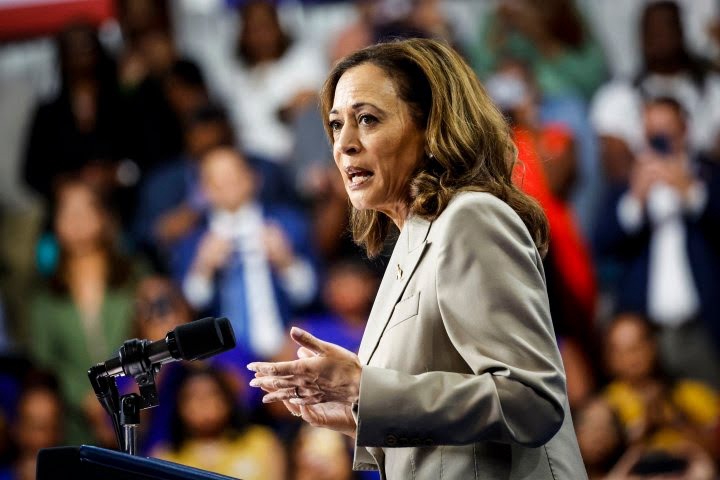
Vice President Kamala Harris finds herself in the crosshairs of a political controversy as Congressman Ronny Jackson, a former White House physician turned GOP representative, criticizes her for alleged policy flip-flopping. In a recent tweet, Jackson accused Harris of duplicity regarding her stance on tip taxation, calling her a “#CopyCatKamala.”
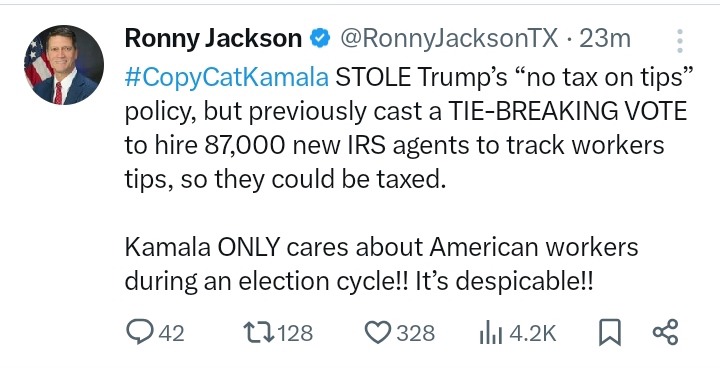
Jackson’s tweet, posted on August 17, 2024, points out a significant contradiction in Harris’s policy positions. He alleges that Harris is merely mimicking former President Donald Trump’s policy of eliminating taxes on tips. This comes after she previously supported a measure to hire 87,000 new IRS agents to monitor and tax workers’ tips. Jackson’s tweet reads, “#CopyCatKamala STOLE Trump’s ‘no tax on tips’ policy, but previously cast alr TIE-BREAKING VOTE to hire 87,000 new IRS agents to track workers tips so they could be taxed. Kamala ONLY cares about American workers during an election cycle!! It’s despicable!!”
The criticism is timely, as the political landscape heats up with the upcoming presidential election. Harris recently promised to remove taxes on tips, a pledge she claims is part of her broader commitment to supporting American working-class families. However, Jackson’s critique suggests that Harris’s newfound support for this policy may be driven by electoral calculations rather than genuine concern.
The controversy centers around Harris’s contradictory actions. While she now supports eliminating tip taxes, her previous vote for increased IRS staffing to monitor such tips appears inconsistent with her current position. Jackson’s comments underscore his belief that Harris’s actions are politically motivated, aimed at gaining favor with voters rather than reflecting true policy convictions.
As the presidential race intensifies, Jackson’s sharp critique highlights ongoing debates about the authenticity of political promises and the sincerity of candidates’ commitments to issues affecting American workers. The accusation of opportunistic behavior adds a layer of skepticism to Harris’s policy stance, questioning whether her support for eliminating tip taxes is a strategic maneuver rather than a principled stance.
With the election drawing near, the scrutiny of political figures and their policy proposals is likely to increase. Jackson’s tweet serves as a reminder of the complex dynamics at play in electoral politics, where policy positions are often closely examined for signs of genuine concern versus strategic positioning.
As the debate over tip taxation and support for working-class Americans continues, all eyes will be on how Vice President Harris responds to these accusations and how this controversy might impact the broader electoral narrative.