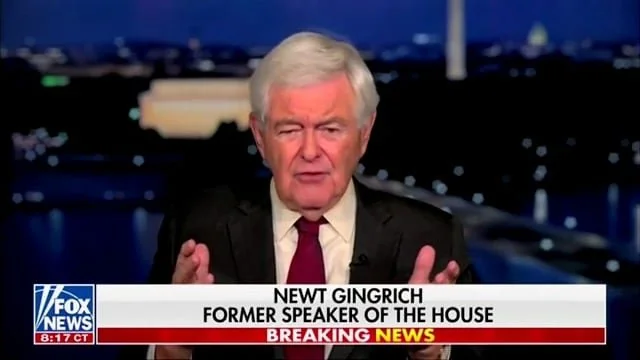
In a recent segment on Fox News, former House Speaker Newt Gingrich expressed disbelief over a pro-Kamala Harris advertisement narrated by actress Julia Roberts. This ad, produced by Vote Common Good, encourages women to exercise their voting rights independently, stating that they are not obligated to vote according to their husbands’ preferences or disclose their voting choices to them.
Gingrich, appearing alongside host Sean Hannity, reacted strongly to the ad, which has already stirred controversy among right-wing commentators, including Turning Point USA’s Charlie Kirk. During the segment, Gingrich took the opportunity to voice his discontent, claiming that this messaging promotes dishonesty within marriages.
He stated, “These people are dishonest. They’re relentlessly, routinely dishonest at every level,” referring to those involved in the advertisement. Hannity echoed this sentiment, criticizing what he referred to as “Hollywood jackasses” for their perceived role in shaping political narratives.
Gingrich posed a provocative question during the discussion: “How do you run a country where you walk around saying wives should lie to their husbands, husbands should lie to their wives?” This remark drew attention given Gingrich’s own history with marital infidelity, having been unfaithful to both of his first two wives.
He continued his critique, describing the Democratic Party as having fostered a “totally amoral, corrupt, sick system.” Gingrich lamented the loss of what he termed “dignity, patriotism, and a sense of morality,” suggesting that these values have been replaced by “really sick people” within the political landscape.
Concluding his tirade, Gingrich urged listeners to recognize and confront what he believes is a dishonest political agenda. His comments highlight the ongoing cultural and political divides in the United States, particularly surrounding issues of gender and voting rights.
The ad featuring Roberts and the ensuing backlash reflect broader tensions in American society, where discussions about autonomy, honesty, and political allegiance continue to spark intense debate. As the 2024 election approaches, these conversations are likely to shape the narrative and influence voter sentiment across the country.