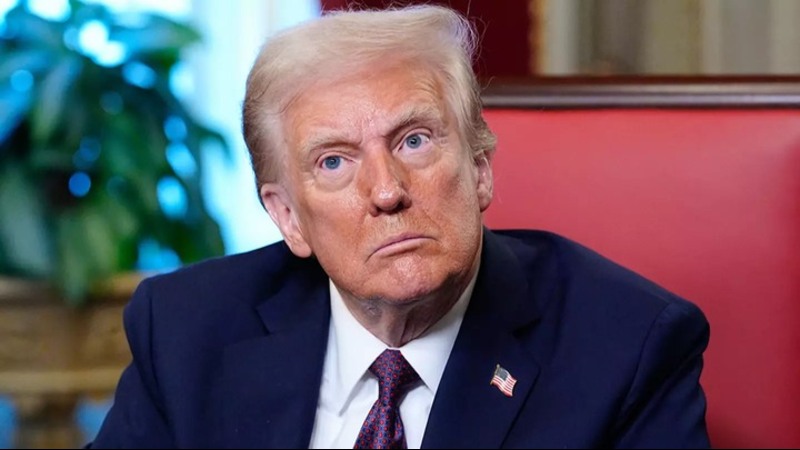
The launch of a new Chinese AI chatbot, DeepSeek, has sent shockwaves through the U.S. stock market, causing a massive $600 billion drop in Nvidia’s stock value. President Donald Trump has responded to this development, labeling it a significant “wake-up call” for American tech companies to sharpen their competitive edge.
This announcement comes on the heels of Trump’s unveiling of Stargate, a $500 billion AI project supported by industry titans like Microsoft, Oracle, OpenAI, and Nvidia, ironically highlighting the urgency for U.S. leadership in AI technology at a time when it’s being challenged.
What is DeepSeek?
Since its release on January 20, DeepSeek has quickly climbed the charts in app stores across the U.S., UK, and beyond. Developed by Liang Wenfeng, co-founder of High-Flyer hedge fund, this AI chatbot mirrors the functionalities of leading Western platforms like ChatGPT and Google’s Gemini, capable of answering a broad range of queries. Despite its reluctance to engage with politically sensitive topics, DeepSeek’s performance is said to match those of its American counterparts.
How Does DeepSeek Work?
DeepSeek operates on the open-source DeepSeek-V3 model, which its developers claim was trained for a mere $6 million. This is a stark contrast to the billions invested by competitors in the U.S. The efficiency of DeepSeek is further underscored by its use of significantly fewer GPU chips—around 2,000 compared to the 16,000 used by other top models. This cost-effective approach has caught the attention of industry leaders like Sam Altman of OpenAI, who acknowledged the model’s impressive capabilities despite affirming OpenAI’s intent to outdo it.
Chip Export Ban and Market Impact
The U.S. had previously tightened export controls on high-performance chips to China, aiming to safeguard national security. However, High-Flyer’s foresight in stockpiling chips has allowed DeepSeek to leverage less advanced but still effective Nvidia chips not subject to these bans. This has sparked skepticism, with figures like Elon Musk questioning the true scale of DeepSeek’s chip usage.
The fallout has been particularly harsh for Nvidia, whose stock plummeted by 17%, dropping its market cap from $3.5 trillion to $2.9 trillion. This not only dethrones Nvidia from being the world’s most valuable company but also raises questions about the U.S.’s assumed dominance in AI technology development.
Navigating the New AI Landscape
Liang Wenfeng, in a recent interview, expressed surprise at the market’s reaction to DeepSeek’s pricing strategy, emphasizing that their focus was on cost efficiency rather than market disruption. This event underscores a pivotal moment where innovation from emerging tech hubs like China could redefine global tech standards, urging a reevaluation of strategies among established tech giants in the U.S.