


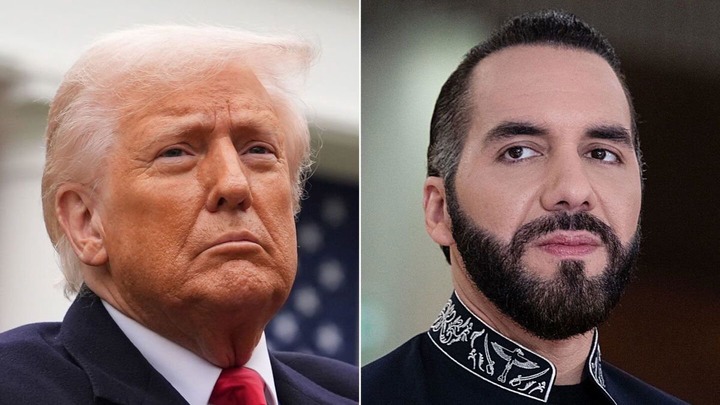
Surprising twist amid tense international relations, El Salvador’s President Nayib Bukele is set to meet with U.S. President Donald Trump at the White House this Monday, strengthening a key partnership that’s making waves in the ongoing immigration debate. Bukele’s support in accepting deported migrants, many labeled as violent criminals or gang members by the Trump administration, is fast becoming a cornerstone of U.S. immigration policy.
This visit underscores Bukele’s rising status as one of Trump’s most significant foreign allies. Bukele’s willingness to take back deported individuals, whom Trump has called “some of the most violent alien enemies,” aligns with the administration’s aggressive push to remove undocumented migrants from the U.S. The collaboration was highlighted by a recent announcement from Secretary of State Marco Rubio, who praised the U.S.-El Salvador alliance as a model for regional security and prosperity.
Bukele, often dubbed “the world’s coolest dictator” by his supporters, has drawn attention both for his tough stance on crime in El Salvador and for his controversial methods of tackling gang violence, including suspending certain civil liberties. His no-nonsense approach has won him widespread support at home, where he was re-elected in a landslide victory last year, but it’s also earned harsh criticism from international human rights groups.
Despite the backlash over his policies, Trump has been effusive in his praise of Bukele. Speaking from Air Force One over the weekend, Trump commended the El Salvadoran president’s efforts to confront what he views as dangerous elements within the migrant population, brushing aside concerns over human rights. “He’s been amazing,” Trump said. “He’s taking care of a lot of problems that we have.”
A significant part of their partnership is the controversial Terrorism Confinement Center (CECOT), a high-security facility in El Salvador, where deported gang members are being housed. The U.S. government has used the Alien Enemies Act to expedite the deportation of individuals, many of whom have been labeled as criminals based on gang affiliations. While the evidence for these allegations remains limited, the Trump administration is pushing ahead with its plan to deport as many as one million undocumented migrants during Trump’s second term.
With the Supreme Court recently allowing the continued use of the Alien Enemies Act, the pressure on both countries to manage these deportations is mounting. Bukele’s upcoming White House visit is set to reaffirm his role in this high-stakes immigration agenda, with both leaders likely to discuss expanding their cooperation further in the months ahead.


