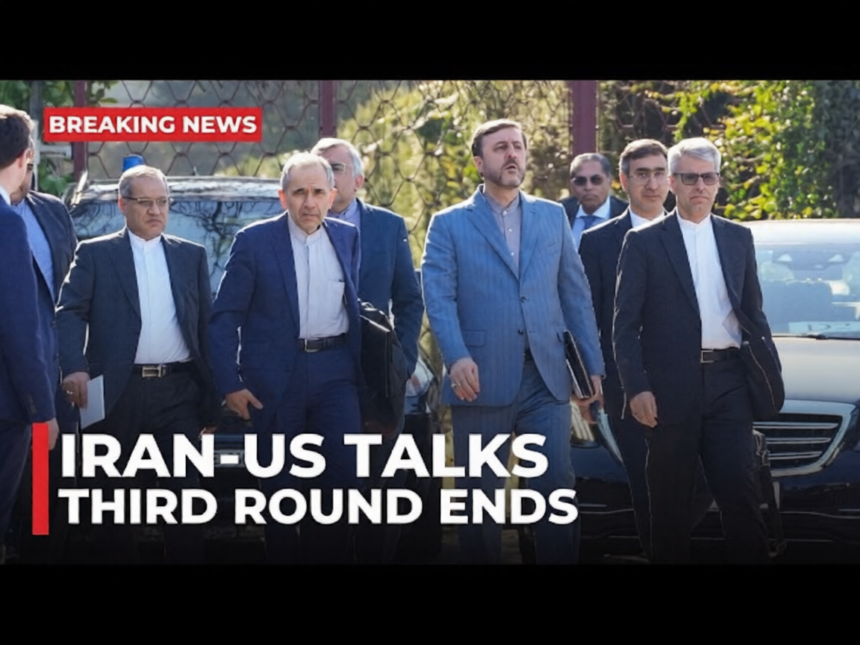
Third round of high-level indirect talks between the United States and Iran has wrapped up in Geneva, with cautious optimism emerging from both sides.
Mediated by Omani officials, the discussions reportedly lasted three hours — longer than expected. That alone signaled that something substantial was unfolding behind closed doors.
According to diplomats familiar with the talks, Iran presented a formal proposal outlining possible limits on its uranium enrichment program. In exchange, Tehran is seeking relief from economic sanctions and opening the door to broader economic and financial cooperation.
While no breakthrough was announced, negotiators agreed to continue discussions next week in Austria. For now, both delegations are returning home to brief their governments and reassess strategy.
Iranian officials describe the talks as “serious and intense.” However, their tone reflects caution rather than celebration.
Tehran says it is willing to provide assurances that its nuclear program will remain peaceful. At the same time, leaders stress that certain issues remain off the table. Inspection mechanisms, uranium stockpiles, and enrichment levels remain central sticking points.
Years of mistrust continue to hang over the process. Previous diplomatic efforts collapsed abruptly, leaving both sides wary of overcommitting too quickly.
Even as diplomacy continues, the military picture tells another story.
The USS Gerald Ford — the world’s largest aircraft carrier — has departed Crete and is moving east. Another carrier group is already positioned near the Gulf region. More than 300 American military aircraft have been deployed to the broader Middle East.
Washington describes this posture as strategic pressure designed to strengthen its negotiating position. President Donald Trump has made his red line clear: Iran cannot obtain a nuclear weapon.
Still, the buildup has raised concerns at home and abroad. Polls in the United States suggest limited public appetite for military confrontation. Meanwhile, some lawmakers are pushing for congressional approval before any potential military action.
Observers in Geneva note a sense of déjà vu. Similar talks have taken place before, only to unravel amid regional escalation.
Yet there are signs that a diplomatic off-ramp may still exist.
Options reportedly being discussed include capped enrichment levels, removal or reduction of enriched uranium stockpiles, and stronger oversight by the International Atomic Energy Agency. Independent verification could help bridge the trust gap — if both sides agree on terms.
The coming days will be critical. How Washington recalibrates its approach — and how Tehran responds — may determine whether diplomacy advances or stalls once again.
Many citizens express frustration and anxiety about the possibility of renewed conflict. Memories of past strikes, civilian casualties, and economic hardship remain fresh. At the same time, widespread economic dissatisfaction continues to fuel uncertainty about the future.
While some hope diplomacy can prevent another crisis, others doubt that negotiations will hold.
For now, the region stands at a crossroads. Talks are continuing. Military forces remain on alert. And the world is watching to see whether next week’s meeting brings meaningful progress — or another missed opportunity.