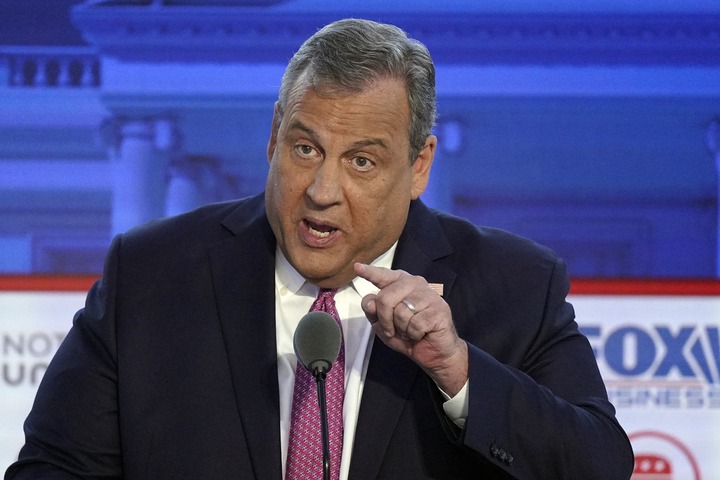
Former New Jersey Governor Chris Christie has reignited his assertion that former President Donald Trump bears responsibility for the surge in antisemitism and hate in the United States, as reported by Politico on Sunday.
In a recent interview on CNN’s “State of the Union,” Christie pointedly argued that Trump’s “intolerant language and conduct” has not only fueled prejudice but has also provided a troubling form of “permission” for others to act in a similarly intolerant manner.
“When you show intolerance toward everyone, which is what [Trump] does, you give permission as a leader for others to have their intolerance come out,” emphasized Christie. “Intolerance toward anyone encourages intolerance toward everyone.”
Christie’s critique extends beyond Trump, blaming university professors and presidents for being “unwilling to stand up to antisemitism on their campuses.”
His call for action includes urging governors, particularly in states where Jewish students face threats on college campuses, to deploy state police forces for the protection of these students.
While acknowledging various contributing factors to the rise in antisemitism, Christie underscored Trump’s role in amplifying intolerance. “I believe Donald Trump’s intolerant language and conduct give others permission to act the same,” he asserted.
This renewed criticism by Christie comes amid growing concerns about the escalation of antisemitic incidents across the country.
Christie’s decision to highlight Trump’s rhetoric as a contributing factor adds another layer to the ongoing debate surrounding the impact of political discourse on the rise of hate crimes and discriminatory behavior.
His call for university leaders to confront antisemitism on their campuses aligns with a broader conversation about fostering inclusive environments within educational institutions.
The accusation that some academic leaders are unwilling to address antisemitism raises questions about the role of universities in combating discrimination and promoting diversity.
Christie’s specific call for governors to deploy state police to protect Jewish students facing threats on college campuses raises questions about the appropriate response to such incidents.
While providing security is crucial, it also prompts considerations about the broader societal responsibilities to address the root causes of hatred and intolerance.
Critics argue that Christie’s focus on Trump overlooks other systemic issues that contribute to antisemitism.
Christie’s emphasis on leadership, whether at the national or campus level, and the influence of rhetoric in shaping societal norms underscores the need for a comprehensive approach to tackle discrimination.
As the nation faces the complexities of addressing rising antisemitism, the words of influential figures, including former political leaders like Chris Christie, contribute to the ongoing dialogue about responsibility, leadership, and fostering an environment that rejects intolerance in all its forms.
The conversation prompted by Christie’s statements reflects broader discussions on the role of political figures in shaping societal attitudes and the need for a collective effort to confront discrimination in all its manifestations.