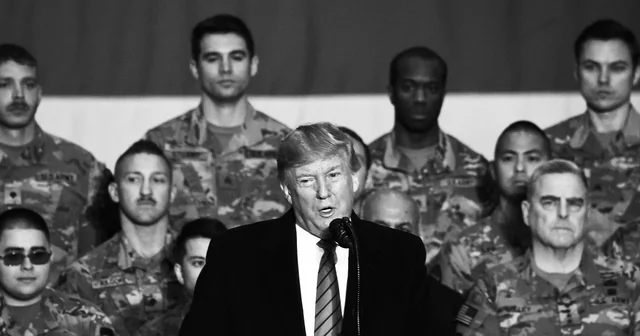
Reflecting on decades of service in the military, the thought of Donald Trump winning the presidency again raises serious concerns. The prospect of Trump politicizing the American military should send shivers down our spines. His approach threatens to undermine the very principles upon which our democracy stands.
In October 1973, shortly after President Richard Nixon ordered the firing of the special prosecutor investigating the Watergate scandal, America raised its global nuclear alert level to DEFCON III—one step away from nuclear war. This decision raised questions: Was it genuinely a response to national security concerns, or merely a distraction from Nixon’s faltering presidency?
I served as a second lieutenant along the border between West Germany and East Germany during that tumultuous time. My battalion was put on high alert, preparing for potential war that could have led to global annihilation. Such moments serve as stark reminders of the dangers inherent in leadership that prioritizes political survival over national security.
As we approach the upcoming election, it’s crucial to recognize that we are not merely voting for a president; we are selecting the commander-in-chief of our armed forces. Trust is paramount. We need a leader who won’t misuse the military for personal gain.
Admiral Thomas Moorer, the chairman of the Joint Chiefs of Staff during Nixon’s presidency, noted that Nixon believed he had to shift the public’s attention away from Watergate. This historical context is vital when considering Trump’s potential presidency. Trump has repeatedly suggested that he would employ military force against citizens who oppose him. Such rhetoric is alarming and inconsistent with the ideals of democracy.
Trump’s comments about military tribunals for his political adversaries demonstrate a willingness to use the armed forces as a tool of retribution. This stance poses a significant threat to the foundations of our democracy. His portrayal of political opponents as “the enemy from within” is not only dangerous but fundamentally anti-democratic.
The implications of Trump’s promises are frightening. He has discussed deploying the military for domestic law enforcement, sidelining local governments. Imagine American soldiers conducting raids to detain undocumented immigrants—this is not the vision of a democratic society but rather echoes of totalitarian regimes.
In addition, Trump’s inclination to remove military officers who do not align with his ideology raises questions about future military leadership. Loyalty to the Constitution should prevail over loyalty to a single leader. Our military personnel take an oath to defend the Constitution, not to serve a political agenda.
During a second term, Trump could surround himself with sycophants, stifling dissenting voices within his administration. This environment poses risks during critical moments when sound judgment and truthful counsel are vital. If military leaders feel compelled to follow unconstitutional orders, we could face mass resignations within the officer corps, leading to chaos within our military ranks at a time when global tensions are already high.
Rather than a professional military committed to national defense, we risk establishing a politicized force that may lose the trust of the American people. A military that threatens its own citizens is a departure from the ideals I spent my career defending.
With over thirty years of military experience—including operations, strategic negotiations, and studying civil-military relations—I have come to the conclusion that Trump is unfit to lead our nation. His actions and rhetoric demonstrate a lack of respect for the historic relationship between military and civilian leadership. This disregard not only jeopardizes public trust in the military but also places our democracy in peril.
Civil-military relations are fundamental to the professionalism of our armed forces. Members of the military pledge allegiance to the Constitution, not to any political figure. The bond between civilian leadership and the military is built on trust, respect, and mutual consultation. Civilian leaders hold the ultimate authority, while the military remains apolitical.
As a veteran, I fear that abandoning this principle would render my service and that of countless others in vain. We must not sacrifice our democratic values for someone who has consistently demonstrated a lack of commitment to serving our nation effectively. The stakes are too high, and the lessons of history too clear.