


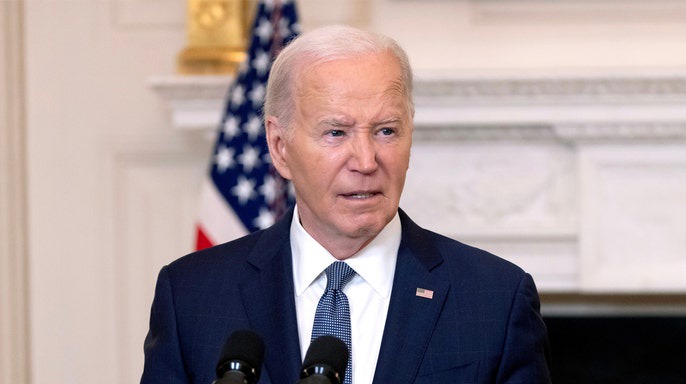
President Joe Biden’s approach to the Israel-Hamas conflict has undergone a significant shift from initial staunch support for Israeli Prime Minister Benjamin Netanyahu to a more forceful strategy aimed at bringing a swift end to the war, reports Politico News on June 6, 2024.
Biden and his administration are actively employing various tactics to increase pressure on Netanyahu, involving regional powers, international organizations, aid groups, Israeli citizens, and even Netanyahu’s political allies and rivals.
There’s a growing sense among U.S. officials and crisis stakeholders that this moment could be pivotal in securing the release of hostages held by Hamas and ending the conflict to prevent further casualties.
The Biden administration is expanding its efforts, reaching out to a broader spectrum of individuals and institutions to ensure Netanyahu faces pressure from all sides.
Former Defense Department official Jonathan Lord described the current strategy as a “blunt-force instrument.”
While the pressure campaign also targets Hamas, Netanyahu presents a more intricate challenge as a key decision-maker whom the U.S. can directly influence.
Internally, Netanyahu faces increasing pressure to reject the cease-fire plan, with potential consequences including loss of his position and legal repercussions.
Adam Ereli, former U.S. ambassador to Bahrain, highlighted Netanyahu’s dilemma, stating that he is “trapped in his own web of political maneuvering” among coalition partners, American pressures, and his security establishment.
Biden’s recent speech outlining the Israeli proposal marked the initial step in a broader U.S. effort.
The administration hopes that Hamas and Israel can at least agree on the initial phase of the plan, involving a temporary cease-fire and the release of hostages and Palestinian prisoners.
U.S. officials, including Secretary of State Antony Blinken, have intensified diplomatic efforts, engaging counterparts in countries like Egypt, Morocco, and Qatar, which have influence over both Netanyahu and Hamas.
Blinken has held discussions with key members of Netanyahu’s war cabinet, including Defense Minister Yoav Gallant and Benny Gantz, both dissatisfied with Netanyahu’s handling of the conflict.
Gantz has issued an ultimatum threatening to leave Netanyahu’s coalition if a more robust vision for managing the Gaza conflict is not presented.
Netanyahu’s coalition could face instability if additional ministers, such as Bezalel Smotrich and Itamar Ben-Gvir, withdraw their support, as they oppose the cease-fire plan and advocate for a complete Israeli takeover of the Gaza Strip.

Despite the complexities, Biden and his administration remain steadfast in pressuring Netanyahu while emphasizing Hamas’s responsibility to accept the cease-fire proposal.
Former U.S. officials suggest that Hamas leader Yahya Sinwar may prove more resistant to negotiations than Netanyahu, perceiving himself as having the upper hand in public sentiment.
The Biden administration has engaged with aid groups operating in Gaza to secure their support for the proposal and ensure the safety of their personnel once an agreement is reached.
Efforts are underway to garner further endorsement for the plan from the Group of Seven countries and the United Nations Security Council.
Biden’s personal and political interests in ending the conflict, particularly its impact on Arab American voters in swing states, underscore his commitment despite strained ties with Netanyahu.
In a recent interview with Time magazine, Biden suggested that Netanyahu might be prolonging the conflict to maintain his hold on power.
While the Biden administration continues to exert pressure, CIA Director William Burns and National Security Council Middle East official Brett McGurk are developing additional strategies to advance the proposal.
The administration is also pursuing a resolution through the U.N. Security Council to demonstrate its commitment to ending the conflict, despite potential opposition from Russia and China.
Biden emphasizes both the humanitarian imperative of ending the suffering of Palestinian civilians in Gaza and the political imperative of ending the war.


