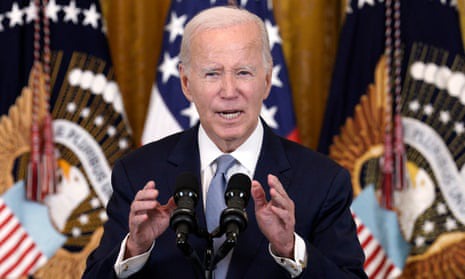
President Joe Biden recently made a significant announcement, revealing a series of new tariffs on various Chinese imports. This development has further heightened the already intense trade tensions between the United States and China, the two largest economies globally. The decision, reported by Al Jazeera on Tuesday, May 14, 2024, underscores Biden’s determination to address what he perceives as unfair competition practices by China.
The targeted sectors for these tariffs include electric vehicles (EVs), advanced batteries, solar cells, steel, aluminum, and medical equipment. Biden’s administration has been critical of China’s financial support for its domestic businesses, labeling it as “cheating” rather than fair competition. In a statement from the White House Rose Garden, Biden emphasized the importance of fair competition, stating, “American workers can outwork and outcompete anyone as long as the competition is fair.”
China has swiftly responded, promising retaliatory measures against the U.S. tariff hikes. The Ministry of Commerce in Beijing expressed strong opposition and vowed to defend its interests. Despite this escalation, the Biden administration plans to uphold tariffs previously implemented by former President Donald Trump while significantly increasing others.
Some of the key changes include quadrupling EV duties to over 100% and doubling semiconductor tariffs to 50%. These tariffs will impact a range of Chinese goods totaling $18 billion, encompassing steel, aluminum, semiconductors, electric vehicles, critical minerals, solar cells, and cranes.
However, the practical impact of the eye-catching EV tariff figures may be limited due to the relatively small number of Chinese EVs imported into the U.S. In 2023 alone, the U.S. imported $427 billion worth of goods from China while exporting $148 billion, highlighting a persistent trade gap.
U.S. Trade Representative Katherine Tai defended the revised tariffs, citing China’s history of intellectual property theft. Nevertheless, she recommended tariff exclusions for several industrial machinery categories from China, including those related to solar product manufacturing equipment.
Biden’s tariff measures are part of a broader strategy aimed at addressing Chinese trade practices and have been met with mixed reactions. Critics argue that the tariffs could potentially increase costs for EVs, impacting Biden’s climate goals and manufacturing job creation efforts.
Despite these concerns, Biden reiterated that his intention is not to incite a trade war but to ensure fair competition and safeguard American interests. He has engaged in discussions with Chinese President Xi Jinping to ease tensions and find common ground.
The ongoing tariff conflict reflects a departure from decades of free-trade policies, signaling a shift in Washington’s approach to trade relations with China. The trajectory of these tariffs, especially in key sectors like EVs and technology, will likely have far-reaching implications for both economies and global trade dynamics.