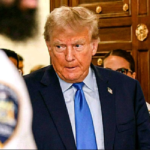
Donald Trump’s lawyer in Fulton County, Steven Sadow, has unveiled a potential legal strategy that could impact the timing of Trump’s trial and his 2024 presidential ambitions.
Sadow argues that if Trump secures victory in 2024, he might be shielded from the election-related charges through the concept of presidential immunity. This assertion raises questions about a potential delay in the trial until after a theoretical second term for Trump.
During a recent hearing in Fulton County Superior Court, Sadow not only requested an earlier trial start but also suggested that a trial after a 2024 victory might be postponed until after Trump’s presidential term concludes.
The legal argument hinges on the supremacy clause, which gives precedence to federal laws over conflicting state and local laws.
Judge Scott McAfee questioned Sadow on the possibility of trying Trump in 2025 if he wins the election. Sadow’s response emphasized the belief that, due to the supremacy clause and Trump’s presidential duties, the trial might be deferred until after his term.
This legal strategy is exclusive to Trump and depends on his electoral success, making it a topic of discussion among legal experts.
Judge McAfee proposed the idea of separate trials for defendants, adding a layer of complexity to the legal proceedings.
Outside the courtroom, Sadow’s mention of presidential immunity sparked debates among legal analysts, with the prospect of separate trials further complicating the situation.
While no definitive decisions were made during the hearing, the legal complexity and various defense strategies were evident.
Attorneys representing other defendants presented motions ranging from seeking extensions to filing deadlines to advocating for the dismissal of charges.
Some argued for the right to question the 2020 election results, emphasizing free speech rights. Chris Anulewicz, representing defendant Robert Cheely, cautioned against prosecuting individuals for expressing disagreement with election outcomes.
Judge McAfee did not rule on the trial’s timing but scheduled further discussions in mid-December, indicating the legal proceedings will continue.
As the legal saga unfolds, constitutional law nuances, presidential immunity, and free speech rights will remain central to debates. The events in Fulton County Superior Court will shape not only Trump’s legal fate but also broader discussions on the intersection of legal proceedings and political controversies.