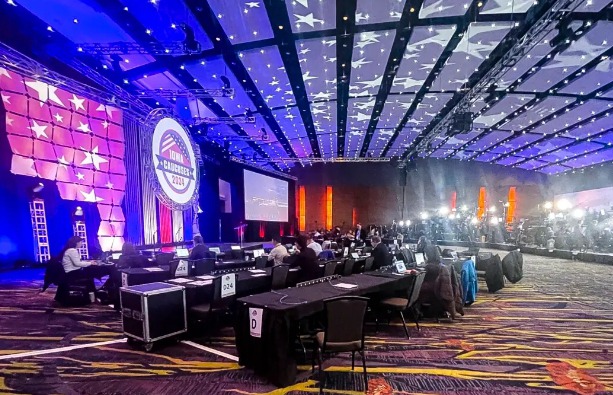
As the Iowa caucuses unfolded on January 15, a cloud of controversy emerged amid concerns that some Democrats might seek to influence the outcome by participating in the Republican caucuses, as reported by Epoch Times on Monday, January 15, 2024.
Despite the speculation, Republican officials expressed varying levels of confidence that such efforts would not significantly impact the final results.
Gary Nystrom, the Republican chairman for Boone County, acknowledged the potential for Democrats to cross over but noted a shift in expectations, stating, “As of now, I’m not expecting a large number of people to do that.”
State GOP chair Jeff Kaufmann echoed a similar sentiment on CNN, suggesting a low probability of Democrats attempting to influence the Republican caucuses.
While the possibility of crossover votes has been discussed during caucus-captain training sessions, Trump supporters downplayed the potential impact, doubting that it would significantly affect President Trump’s support.
Nathaniel Gavronsky, a Trump caucus captain in Warren County, recognized that party affiliations can change for various reasons, including genuine support for Trump or disillusionment with President Biden.
Gavronsky pointed out that some Democrats might switch to vote for Trump, while others could be motivated to cast their ballots against him or disrupt the system.
This dynamic isn’t new, as he mentioned seeing a couple of hundred people switching to Republican affiliation in past election cycles, with many reverting to Democrat status later.
An interesting trend observed by Gavronsky suggested that some Democrats might be switching their party allegiance to support former United Nations Ambassador Nikki Haley, highlighting a potential shift in political preferences among crossover voters.
Despite the cautious acknowledgment of possible crossover attempts, Trump supporters and local officials dismissed the idea of a significant impact on the caucus results.
Stacey Besch, a Trump supporter, believed that any tactics to lower Trump’s numbers would only energize his supporters further.
Similarly, David Alcazar suggested that most crossovers would be from Democrats and independent voters supporting Trump due to economic concerns.
While David Engel, co-chair of the Marshall County Republicans, admitted that some crossover voting might occur, he downplayed the potential impact on the results.
Local officials like Engel reported instances of voters seeking to change their party affiliation, but the overall consensus was that the numbers wouldn’t be substantial enough to sway the outcome.
Notably, Iowa voters can legally change their party affiliation and register to vote at the caucus.
The Iowa Republican Party emphasized the importance of timely arrival at the caucus venue, underlining the significance of proper identification for voting.
The state GOP provided details on confirming voter registration and the necessary documentation required for registration.
As the controversy over potential crossover votes unfolded, the focus on Iowa’s caucuses underscored the delicate nature of party dynamics during primary elections.
In the backdrop of political speculation and shifting party affiliations, the Iowa caucuses commenced at 7 p.m. Central Time at over 700 locations across the state.
The outcomes of these caucuses will not only impact the immediate nomination race but may also prompt discussions on refining caucus protocols and ensuring the integrity of the electoral process in future elections.