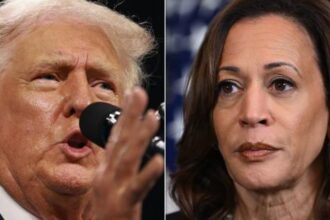
A recent discussion on MSNBC highlighted an intriguing critique of Donald Trump’s portrayal of masculinity in his political campaigns. Canadian journalist and author Liz Plank, known for her book For the Love of Men: A Vision for Mindful Masculinity, argued that Trump’s self-styled image as a “strongman” is more of a performance than a reflection of true masculinity. According to Plank, “Trump puts on a show of masculinity,” asserting that he often exploits traditional male traits for his own gain.
A Closer Look at Trump’s Masculinity
Trump’s campaigns have long been rooted in a strongman narrative, emphasizing themes of power and dominance. His admiration for controversial figures like Mussolini, Hitler, and Kim Jong Un reflects a misguided vision of leadership steeped in toxic masculinity. Plank points out that true masculine figures, such as Tim Walz, use their strength for good, contrasting sharply with Trump’s approach, which often involves belittling opponents.
This portrayal of masculinity often comes at the expense of others, as Trump is known for labeling individuals as weak or incompetent. Such behavior exemplifies characteristics of toxic masculinity, as he attempts to assert dominance through insults and bravado. In the words of Plank, “Masculine men aren’t afraid to debate women,” emphasizing that true strength lies in respect and dialogue, not in aggressive posturing.
The Makeup Factor: A Symbol of Inauthenticity
During her appearance, Plank made a humorous yet pointed observation about Trump’s use of makeup. She noted, “This is a guy who spends more time with his makeup artists than with his own advisors,” implying that his external presentation contradicts his claims of rugged masculinity. In a lighthearted jab, Plank suggested that Trump “probably wears more makeup than Kamala Harris,” highlighting the absurdity of his self-portrayal as the archetype of manliness.
This commentary aligns with broader perceptions of masculinity, which suggest that true masculine figures embrace authenticity and are not overly concerned with appearances. In stark contrast, Trump’s emphasis on image appears to overshadow genuine leadership qualities.
The Real Definition of Manliness
In discussions about what it truly means to be a man, Plank asserts that genuine masculinity is characterized by qualities such as respect, kindness, and the ability to engage in constructive dialogue. She argues that real men “protect women” and do not resort to policies that endanger their well-being, such as restrictive abortion laws.
Her critique of Trump’s behavior extends to his relationship with women and his approach to fatherhood. Plank argues that a true man should embody traits of responsibility and support, not the philandering and abusive behavior often attributed to Trump. In her view, being a man means being a good father, a loving partner, and a respectful leader.
A Final Reflection
In light of these observations, it becomes clear that the concept of masculinity is evolving. As Plank articulates, the modern man is not defined by aggression or dominance but rather by empathy and respect for others. In an era where traditional notions of masculinity are being challenged, it’s essential to recognize that true strength lies in understanding and supporting one another.
In the end, it’s not just about Trump or any political figure; it’s about redefining masculinity for a better future. As Plank so aptly puts it, “Being a man means taking it like a man and moving on.” Embracing these values may lead to a more inclusive and compassionate society, where everyone is valued and respected, regardless of gender.