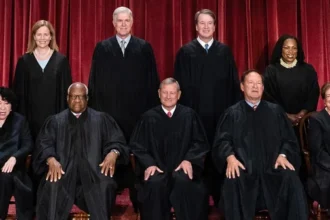
Senator Dick Durbin has taken a proactive stance by seeking to compel a vote on a Supreme Court ethics bill, especially in light of recent controversies surrounding Justice Alito. Durbin’s move reflects a growing concern about transparency and accountability within the highest court in the land.
The proposed ethics bill aims to establish clearer guidelines and standards for Supreme Court justices, addressing issues such as conflicts of interest, recusal procedures, and financial disclosures. Durbin’s push for a vote underscores the urgency of addressing these matters, particularly given the recent scrutiny faced by Justice Alito over his public statements and perceived biases.
The controversy surrounding Justice Alito stems from his remarks at a conservative gathering, where he criticized the media and expressed skepticism about the judiciary’s independence. These comments have raised questions about Alito’s impartiality and adherence to ethical norms, prompting calls for greater oversight and accountability within the Supreme Court.
Durbin’s efforts to force a vote on the ethics bill signal a broader push for reform within the judiciary, aiming to restore public trust and confidence in the Supreme Court. By advocating for transparency and accountability measures, Durbin seeks to ensure that the Court operates with integrity and upholds the principles of justice and fairness.
However, Durbin’s initiative is likely to face challenges, as debates over judicial ethics and oversight often spark partisan divisions and ideological differences. Critics argue that the proposed bill could infringe on judicial independence and interfere with the Court’s decision-making process, while supporters emphasize the importance of upholding ethical standards and preventing conflicts of interest.
As the debate unfolds, Durbin’s push for a vote on the Supreme Court ethics bill highlights the ongoing efforts to address systemic issues within the judiciary and uphold the integrity of America’s highest court. The outcome of this legislative push will have far-reaching implications for the future of judicial oversight and accountability in the United States.