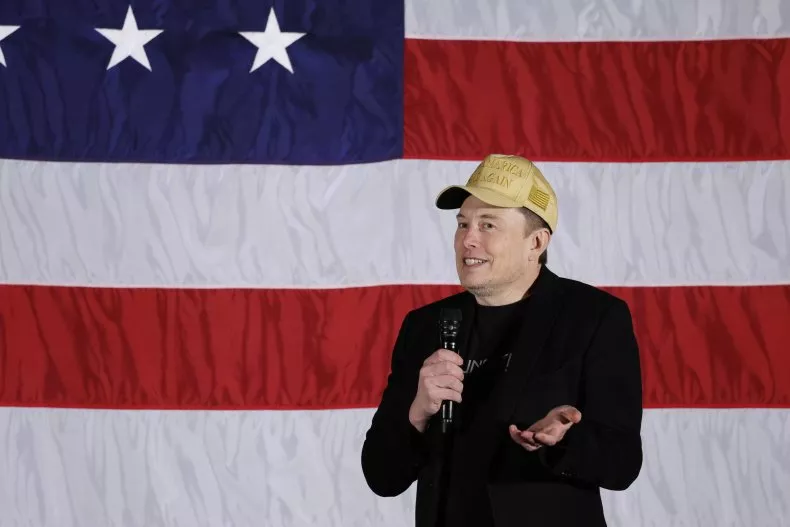
Recent calls for federal investigations into Elon Musk’s America PAC have emerged from a group of Republican lawyers and former officials. They claim that Musk’s initiative to pay voters in swing states for signing a petition could violate election laws. This controversy centers around the legality of offering financial incentives for political actions, specifically regarding voter registration.
In a letter directed to Attorney General Merrick Garland and Pennsylvania Attorney General Michelle Henry, these former Justice Department officials highlighted concerns that Musk’s efforts to pay registered voters in key swing states for signing a petition supporting the First and Second Amendments may constitute illegal activities under federal law. The law explicitly prohibits paying individuals for voter registration, with serious penalties for violations, including potential imprisonment of up to five years.
The Allegations and Legal Implications
The letter, obtained by The Washington Post, asserts, “We are aware of nothing like this in modern political history.” It references federal law, 52 U.S.C. § 10307(c), which states that offering payments for voter registration is illegal. The authors of the letter argue that, while Musk’s payments are framed as compensation for signing a petition, they effectively target registered voters who must first register to qualify for these payments.
Musk’s America PAC is actively promoting a petition that seeks to rally support for constitutional amendments, particularly the First and Second. The initiative is aimed at registered voters in seven pivotal states: Pennsylvania, Georgia, Nevada, Arizona, Michigan, Wisconsin, and North Carolina. Each participant in the petition is offered $100 for their signature and an additional $100 for each registered voter they refer. Furthermore, the PAC has initiated a daily giveaway of $1 million to encourage participation in this effort, running from October 19 until Election Day.
Concerns from Legal Experts
Legal experts and former officials are raising alarms regarding the implications of Musk’s initiative. Paul Schiff Berman, a law professor at The George Washington University, commented on the potential illegality of the offer, emphasizing that it may violate federal statutes related to voter registration. Similarly, Richard Hasen, a UCLA School of Law professor, described Musk’s actions as “clearly illegal,” pointing out that lottery-like incentives cannot be used to influence voting activities.
The urgency of the matter is heightened by the approaching presidential election, which is just two weeks away. The letter signed by eleven former Republican officials, including high-profile figures like Donald Ayer and Phillip Lacovara, stresses the importance of addressing these serious legal questions before the election. They assert that while law enforcement agencies may hesitate to act close to elections, the nature of these allegations warrants immediate attention.
Musk’s Response
In response to the ongoing controversy, Musk shared on X (formerly Twitter) that his efforts have led to a significant increase in Republican voter registration in Pennsylvania, claiming a threefold advantage over Democratic registrations last week. However, as investigations loom, the future of Musk’s America PAC remains uncertain.
The Department of Justice has acknowledged receipt of the letter but has not commented on whether any investigations will proceed. As the political landscape evolves, the implications of these allegations could resonate throughout the upcoming election cycle.