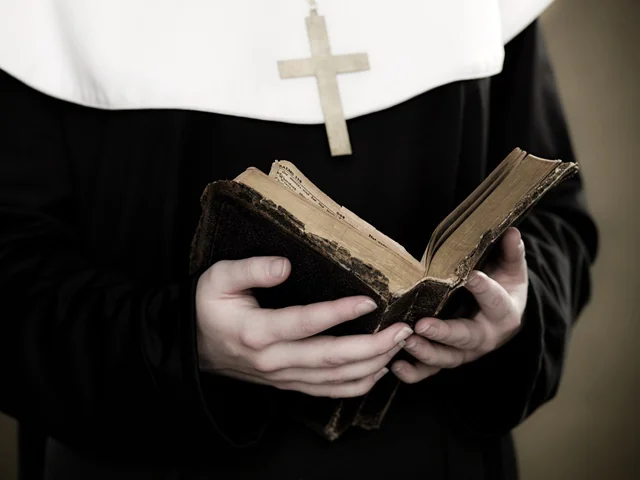
Allegations of voter fraud have surfaced in Pennsylvania, but this time, the accusations involve an unlikely group—the Benedictine Sisters of Erie. On Tuesday, Cliff Maloney, a right-wing canvasser, claimed that the nuns were part of a voter fraud scheme. However, his claims have been proven false.
Maloney’s Unfounded Accusations
Maloney, a prominent GOP canvasser, took to Twitter to raise concerns about voter integrity, accusing the Benedictine Sisters of Erie’s monastery of fraudulent activities. He alleged that 53 registered voters were listed under the monastery’s address despite no one residing there. To support his claim, Maloney posted a screen recording revealing the names, ages, and political affiliations of those registered at the monastery’s address. He further announced that his legal team was investigating the matter, vowing to prevent “illegal votes” from being counted.
The Reality: A Case of Misinformation
The Benedictine Sisters of Erie were quick to refute these claims. A spokeswoman for the monastery clarified that the community is home to 55 sisters, all legally registered to vote. In fact, the names shared by Maloney matched those listed on the monastery’s official website. Linda Romey, the communications coordinator for the monastery, expressed her concern about the public disclosure of personal information, calling it a violation of the sisters’ privacy.
Romey firmly dismissed Maloney’s claims, explaining that the sisters have resided in the monastery since 1970, with their voter registrations being entirely legitimate. The situation raised questions about how such a baseless allegation could gain traction.
Maloney’s Canvasser Sparks Controversy
Maloney’s information reportedly came from a canvasser identified only as “Jeremy.” According to Maloney, Jeremy had a difficult time locating the monastery and was confused by what he described as “a church but no house.” Upon reviewing the voter information for the address, he discovered 53 registered voters and, allegedly, a woman working in the building told him that no one resided there long-term. This interaction, however, has been strongly disputed by the monastery.
Romey found this version of events baffling, explaining that no one at the monastery would have made such a statement. She also noted that it would be difficult for anyone to enter the building unnoticed, as the entrance is monitored during the day.
Continuing to Press Claims
Despite the monastery’s response, Maloney doubled down on his accusations, stating in a social media post that his team is still “analyzing the situation.” He acknowledged the sisters’ defense, claiming he appreciated their public reply but insisted on needing more evidence before dropping the issue.
Maloney’s persistence has stirred further tension, as he declared this a matter of “political warfare” in his pursuit of what he calls “FAIR and SECURE elections.”