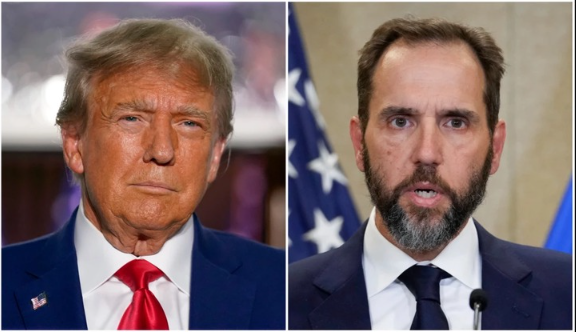
Special Counsel Jack Smith is causing a stir by requesting information from Twitter about users interacting with former President Trump’s tweets just before January 6th. The recent release of a heavily redacted search warrant has shed light on the extent of Smith’s pursuit of details from individuals who liked or retweeted Trump’s messages.
The controversy revolves around concerns about privacy, freedom of expression, and the potential consequences of government agencies closely examining online interactions, as reported by The Epoch Times on December 3, 2023.
Diving into the details of this controversy, it’s crucial to understand the lead-up to Special Counsel Jack Smith’s actions and what they mean for those now on a government list.
At the core is a heavily redacted search warrant targeting Twitter users who engaged with Trump’s tweets in the days leading up to the historic events of January 6th.
The warrant’s broad scope included users who both liked and retweeted Trump’s posts, sparking questions about the reach of such investigations and their impact on online conversations.
Critics argue that this move blurs the line between legitimate investigations and unwarranted intrusion into citizens’ digital lives.
Equally significant is Twitter’s compliance with Smith’s request. The social media giant, known for its role as a platform for public discourse, handed over the requested information, contributing to the compilation of a list of users who interacted with Trump’s account during the specified period.
This development highlights the complex relationship between technology platforms and government authorities. Social media companies must navigate a balance between user privacy and legal obligations, and compliance in this instance has intensified debates on the responsibility these platforms bear in safeguarding user data.
One primary concern is the potential invasion of privacy for the users now on the Special Counsel’s list. The right to engage in online discourse without fear of government scrutiny is a cornerstone of democratic societies, and any encroachment upon this right raises valid concerns.
The inadvertent consequence of such actions is a potential chilling effect on free speech, as individuals may become apprehensive about expressing their opinions online, fearing their digital footprint could become subject to investigation.
The legal and ethical dimensions of this controversy are complex. While Special Counsel Jack Smith presumably must investigate events leading up to the Capitol riots, critics argue that the scope of the information sought and how it was obtained raise questions about proportionality and the protection of constitutional rights.
Furthermore, the implications of such actions on the Fourth Amendment, which protects against unreasonable searches and seizures, are a focal point of legal discussions surrounding this controversy.
As technology advances, the intersection between constitutional rights and the digital realm becomes an increasingly complex terrain to navigate.
In a democratic society, transparency and accountability are essential elements to uphold public trust. The redacted nature of the search warrant and related documents has fueled skepticism about the transparency of Smith’s actions.
Citizens have the right to know the reasons behind such requests, the criteria for selecting individuals for scrutiny, and the overall objectives of the investigation.
The lack of transparency in government actions can potentially erode public trust and confidence in the institutions tasked with upholding justice.
As this controversy unfolds, calls for increased transparency and accountability are likely to resonate among those concerned about the balance between national security and individual rights.
This controversy also places social media platforms under a microscope, prompting a reevaluation of their roles in facilitating public discourse.
The compliance of Twitter with Smith’s demand highlights the complex dynamics between technology companies and government authorities.
As online platforms become central to political discourse, they find themselves grappling with the responsibility to protect user privacy while adhering to legal obligations.
The incident raises questions about the need for clearer guidelines and protocols to govern the interactions between government entities and social media platforms, ensuring that user rights are safeguarded without compromising legitimate investigative efforts.
In the wake of Special Counsel Jack Smith’s demand for Twitter user data linked to interactions with President Trump’s tweets, a complex web of legal, ethical, and societal implications has emerged.
The controversy underscores the challenges in striking a balance between individual privacy rights and the legitimate needs of investigative authorities.
As the debate unfolds, the spotlight remains on the importance of transparent and accountable government actions, the evolving responsibilities of social media platforms, and the delicate dance between preserving democratic values and addressing national security concerns.
In an era where the digital landscape is integral to public discourse, finding equilibrium in the intersection of privacy and investigation becomes paramount for the continued strength of democratic principles.