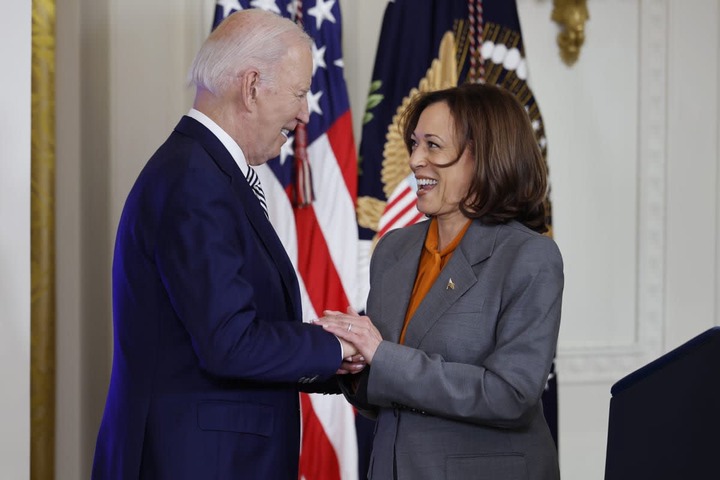
Vice President Kamala Harris faces a precarious political landscape marked by a significant decline in her approval ratings. Despite President Joe Biden’s steadfast commitment to having her as his running mate in the 2024 Democratic nomination, Harris’ dwindling popularity raises questions about its potential impact on the upcoming presidential election.
Political analysts are expressing deep concern over the situation, with one prominent political scientist suggesting that Harris’ unpopularity “could end up being a difference-maker” in the 2024 election. Despite the absence of notable Democratic challengers to the White House incumbent, the Vice President’s approval ratings have taken a hit throughout the year.
According to an analysis by polling website 538, released on December 5, Harris’ net disapproval rating has surged by 7.4 percent since the beginning of the year, reaching 17.4. The figures reveal a drop in approval from 41.7 percent to 36.3 percent and an increase in disapproval from 51.7 percent to 53.7 percent from January 1 to December 5.
A similar narrative emerges from a polling compilation by The Los Angeles Times on December 12, painting a grim picture with a net rating of -16 points. This compilation indicates that 39 percent of registered voters hold a favorable view of the Vice President, while 55 percent view her unfavorably. Notably, Harris hasn’t recorded a positive net approval rating since June 2021, making her less popular than several predecessors after the same period in office.
Moreover, Harris trails President Biden in approval ratings, as he scores two points better with a net rating of -14. With concerns over Biden’s age, Harris’ unpopularity takes on added significance, as 75 percent of Democratic supporters express varying degrees of concern about Biden’s capacity to serve as president given his age, according to an August Newsweek study.
Thomas Gift, the director of University College London’s Center for U.S. Politics, emphasizes the historical significance of Harris’ unpopularity, comparing it to George H.W. Bush’s Dan Quayle. Gift notes that Republicans are capitalizing on the narrative that “a vote for Biden is a vote for Harris.”
Thomas Whalen, an associate professor at Boston University, cautions against prematurely dismissing Harris, drawing parallels to George H.W. Bush’s initial unpopularity. He states, “Modern vice-presidents are always considered unpopular, especially during the first term,” emphasizing that Harris’ current standing is not unprecedented.
As the Democratic Party prepares for the 2024 presidential election, the declining approval ratings of Harris pose a significant challenge. Efforts to revitalize her image and rebuild trust with the American people become crucial as the party navigates a political landscape marked by uncertainty. The question looming is whether Harris and the Democratic Party can reverse the trend before the critical 2024 election, as time ticks away and the stakes remain high.