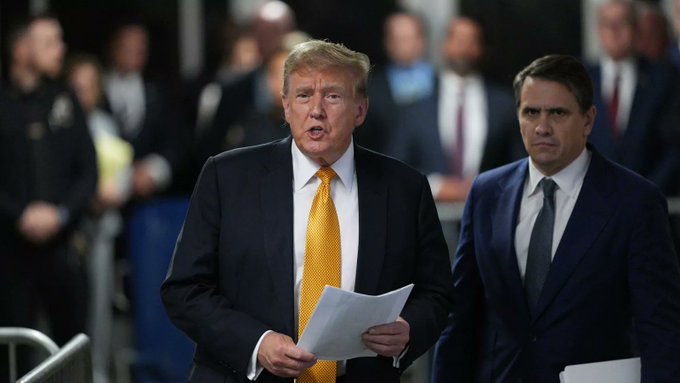
Upcoming trial involving former President Donald Trump, legal experts are sounding alarm bells over the heightened possibility of a hung jury, indicating a potential outcome far outside the norm.
The trial, which centers on allegations of wrongdoing during Trump’s tenure, has garnered intense public interest and scrutiny. According to seasoned attorneys familiar with such high-profile cases, the circumstances surrounding this trial make a hung jury scenario significantly more likely than in typical legal proceedings.
Key factors contributing to this increased risk include the deeply polarized political climate, the complex nature of the charges, and the prominence of the defendant.
Attorney Mark Johnson, who has extensive experience in cases involving political figures, highlighted the challenges faced by both the prosecution and the defense. “The divisiveness within the public and political spheres creates a unique challenge for presenting a cohesive case to the jury,” Johnson explained.
He further noted that the charges against Trump, which encompass a range of alleged misconduct, from financial improprieties to potential constitutional violations, add layers of complexity that could further strain the jury’s ability to reach a unanimous decision.
In a traditional trial, a hung jury occurs when jurors are unable to reach a consensus on the defendant’s guilt or innocence, leading to a mistrial and potentially requiring a retrial with a new jury. However, in cases of such high profile and public interest, a hung jury can have far-reaching implications beyond the legal realm.
“Given the intense media scrutiny and public attention, a hung jury in this case could fuel even greater divisiveness and controversy,” Johnson cautioned.
Legal analysts suggest that efforts to select an impartial jury in this context may prove particularly challenging, as potential jurors’ preconceived opinions and political affiliations could influence their ability to render an unbiased verdict.
Furthermore, the defense’s strategy of challenging the validity and motivations behind the charges, coupled with the prosecution’s efforts to present a compelling case amid a highly charged atmosphere, further compounds the uncertainty surrounding the trial’s outcome.
While the legal process is designed to ensure fair and impartial proceedings, the unique circumstances of the Trump trial underscore the complexities and challenges inherent in administering justice in cases of such magnitude and public interest.
As the trial date approaches, all eyes will be on the courtroom, with the potential for a hung jury looming large as a testament to the unprecedented nature of this legal battle.