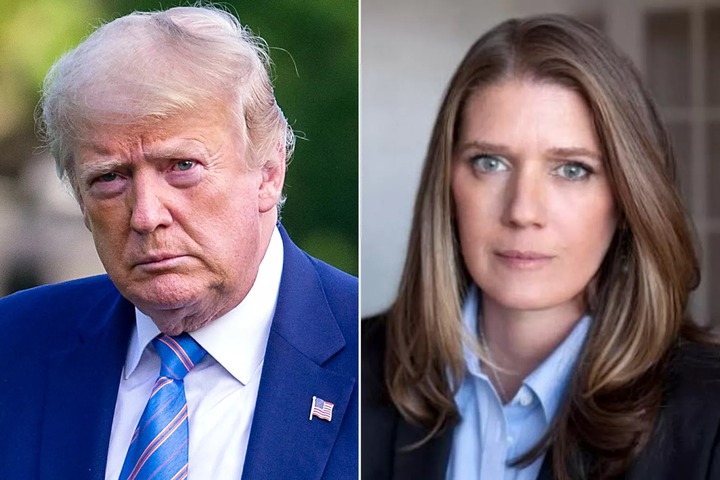
Mary Trump, the estranged niece of former President Donald Trump, has unveiled what she suggests could be a pivotal piece of evidence in the Department of Justice (DOJ) special counsel Jack Smith’s investigation into the actions of the ex-president. Newsweek reported on Friday, December 22, 2023, that Mary Trump believes a November 17, 2020, phone call may serve as the “smoking gun.”
The revelation centers around a conversation involving Donald Trump, Republican National Committee chair Ronna McDaniel, and GOP Wayne County canvassers Monica Palmer and William Hartmann. In an audio recording obtained by The Detroit News, Trump allegedly urged Palmer and Hartmann not to certify Michigan’s presidential election results, a state he narrowly lost to then President-elect Joe Biden.
The phone call has become a focal point in the ongoing investigation into Trump’s post-election activities, particularly his attempts to influence the certification process in battleground states.
Despite his electoral defeat, Trump consistently asserted, without substantial evidence, that the results in Michigan and other key states were tainted by widespread voter fraud.
In a Substack article titled “Donald Smoking Gun On Audio Recording,” Mary Trump dissected the contents of the call, suggesting it could provide crucial evidence for Jack Smith’s investigation. The estranged niece, a vocal critic of her uncle, believes the call captures a critical moment in which Trump actively sought to undermine the election results.
Mary Trump’s analysis of the call sheds light on the potential legal implications of Trump’s actions. The recording reportedly includes Trump urging Palmer and Hartmann not to certify the election results, reinforcing the perception that he was actively involved in efforts to sway the certification process.
This call assumes significance in the broader context of Trump’s attempts to challenge the legitimacy of the election and overturn the results. While Trump’s legal team pursued various lawsuits and challenges after the election, none succeeded in proving the existence of widespread voter fraud. The focus on the audio call adds another layer to the investigations, suggesting that Trump’s direct involvement in pressuring local officials may have legal consequences.
As Mary Trump draws attention to the potential significance of the audio recording, legal experts and political analysts closely monitor developments in Jack Smith’s investigation. The inquiry aims to determine whether Trump’s actions crossed legal boundaries and if they constitute an abuse of power or interference in the democratic process.
The release of the audio recording raises questions about the accountability of public figures and the boundaries of executive power. The alleged attempts to influence canvassers in key battleground states underscore the challenges faced by election officials in ensuring the integrity of the electoral process, particularly in the face of intense political pressure.