The assassination attempt on former President Donald Trump at a campaign rally has left many wondering about the severity of his injury. Despite reports suggesting the bullet only grazed his ear, causing what his son Eric described as “a nice flesh wound,” the incident resulted in significant bleeding. This apparent discrepancy between the injury’s description and its effects has sparked curiosity and concern among the public.
As reported by The Hill on Thursday, July 18, the key to understanding this lies in the unique anatomy of the ear and the nature of head wounds in general. Former President Donald Trump was moved from the stage at a campaign rally on July 13, 2024, in Butler, Pennsylvania.
Medical doctor Rep. Ronny Jackson, a former White House physician who examined Trump after the incident, provided crucial insight into why even a minor injury to the ear can lead to profuse bleeding. Jackson explained that the bullet “took a little bit off the top of his ear in an area that, just by nature, bleeds like crazy.”
This statement highlights a critical aspect of ear injuries: the ear’s rich blood supply. The outer ear, despite its small size, is highly vascularized, meaning it contains numerous blood vessels close to the surface of the skin. When these blood vessels are damaged, even by minor trauma, they can release a disproportionate amount of blood relative to the size of the wound. This phenomenon is not unique to ear injuries but is particularly pronounced in this area due to its anatomical structure.
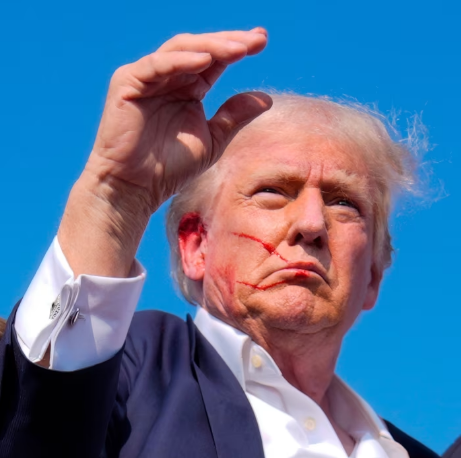
Furthermore, head and facial injuries, in general, tend to bleed more profusely than injuries to other parts of the body. The skin in these areas is thin and lies close to the underlying blood vessels, which can result in dramatic bleeding even from superficial wounds.
The sight of significant bleeding can often lead to assumptions about the severity of an injury. However, in cases like Trump’s, the amount of blood loss may not necessarily correlate with the depth or seriousness of the wound itself. This explains why Trump required a substantial bandage in the days following the incident, despite reportedly not needing stitches or medication. The bandage serves not only to protect the wound but also to absorb any continued bleeding or seepage, which can persist for several days in injuries of this nature.
Understanding the nature of Trump’s injury helps clarify why a seemingly minor wound resulted in such significant bleeding, offering reassurance about his overall health following the incident.