Aug. 6, 2023, and social media was flooded with memes and commentary about a dockside fight in Montgomery, Alabama, that had occurred the day before. In the viral video, a group of about six white individuals began arguing with a Black co-captain who was trying to dock a cruise ship in its reserved space. Unfortunately for the white group, they attacked the co-captain in full view of a crowd filled with many Black bystanders. As onlookers rushed to assist, a young Black man dove into the water from a nearby boat, swimming swiftly and steadily towards the scene. Pulling himself out of the water, he removed one shoe and squared up, looking like he had trained for this moment his entire life. The scene escalated into a full-on melee, with Black people delivering justice (and in one instance, a white folding chair) in an ancestral display of solidarity.
I couldn’t stop thinking about the swimmer, dubbed “Aquaman” by the internet. The next day, I signed up for swim lessons.
As a girl, water filled me with a sense of wonder and play: long bath times, kiddie pools, and playing with my Barbies in the bathroom sink. Swimming, however, was more complicated. No one in my household knew how to swim, so neither did I, placing me among the nearly 64% of Black kids who don’t know how to swim.
My friends in our suburban, mostly white neighborhood spent their summers in the 4-foot-deep, above-ground pools that dotted backyards. The white girls tried to teach me how to hold my breath, make big circles with my arms, and kick my feet to propel myself underwater. However, I couldn’t float or swim above the surface like them. Their bodies seemed buoyed by a freedom I couldn’t replicate.
I remember the last time I was in one of those pools. The arm floaties I was wearing slipped off, and I began to sink. Swirls of bubbles and beams of sunlight encased me in a beautiful but terrifying embrace. I flailed my arms and legs, but the shock of the descent erased everything I’d learned. After what felt like minutes, a set of strong arms, probably belonging to someone’s dad, pulled me out of the water. I gulped in air, and a fear of water began to settle into my bones.
I carried this unease toward swimming into adulthood. But as a water sign, I could hear the whispers from pools, lakes, and oceans: “Come back.” The swimmer in the Montgomery brawl, and the community display by the water, amplified the call.
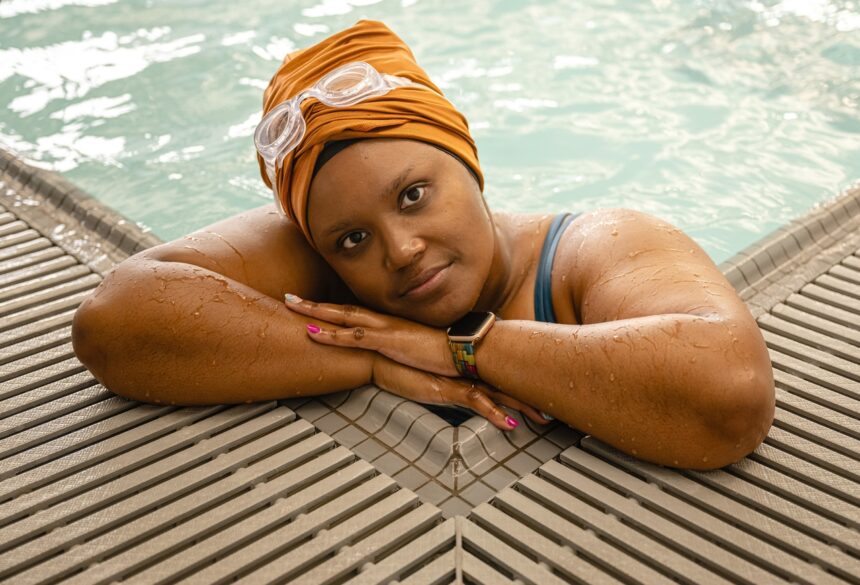
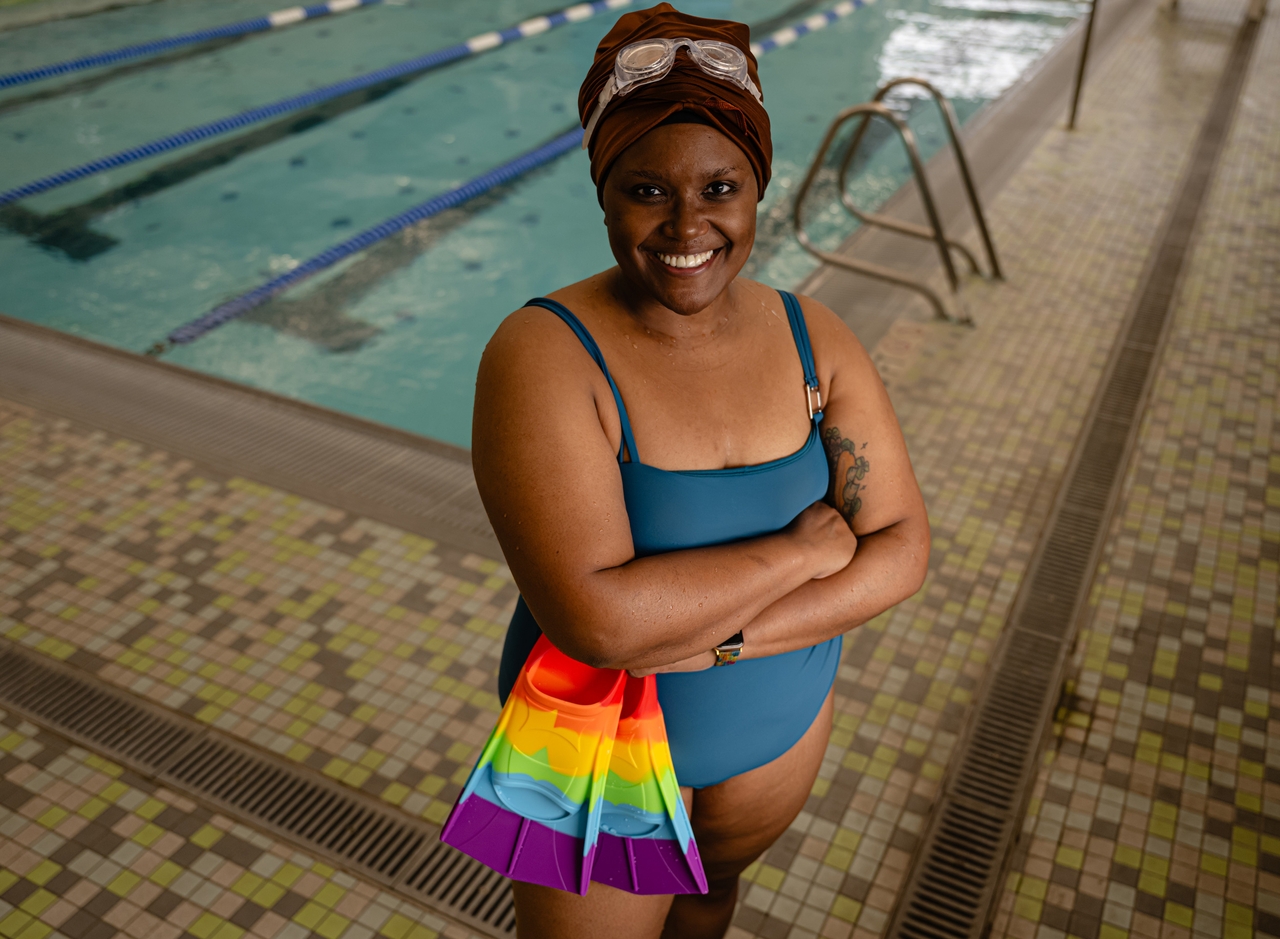
A couple of months after the fight, I found myself at the YMCA pool in a turquoise bathing suit and copper swim turban. Floating dividers on the left side of the pool created three swimming lanes that started at 4 feet deep and ended at 6. The pool was shallower on the right, where a water slide and splash feature entertained kids.
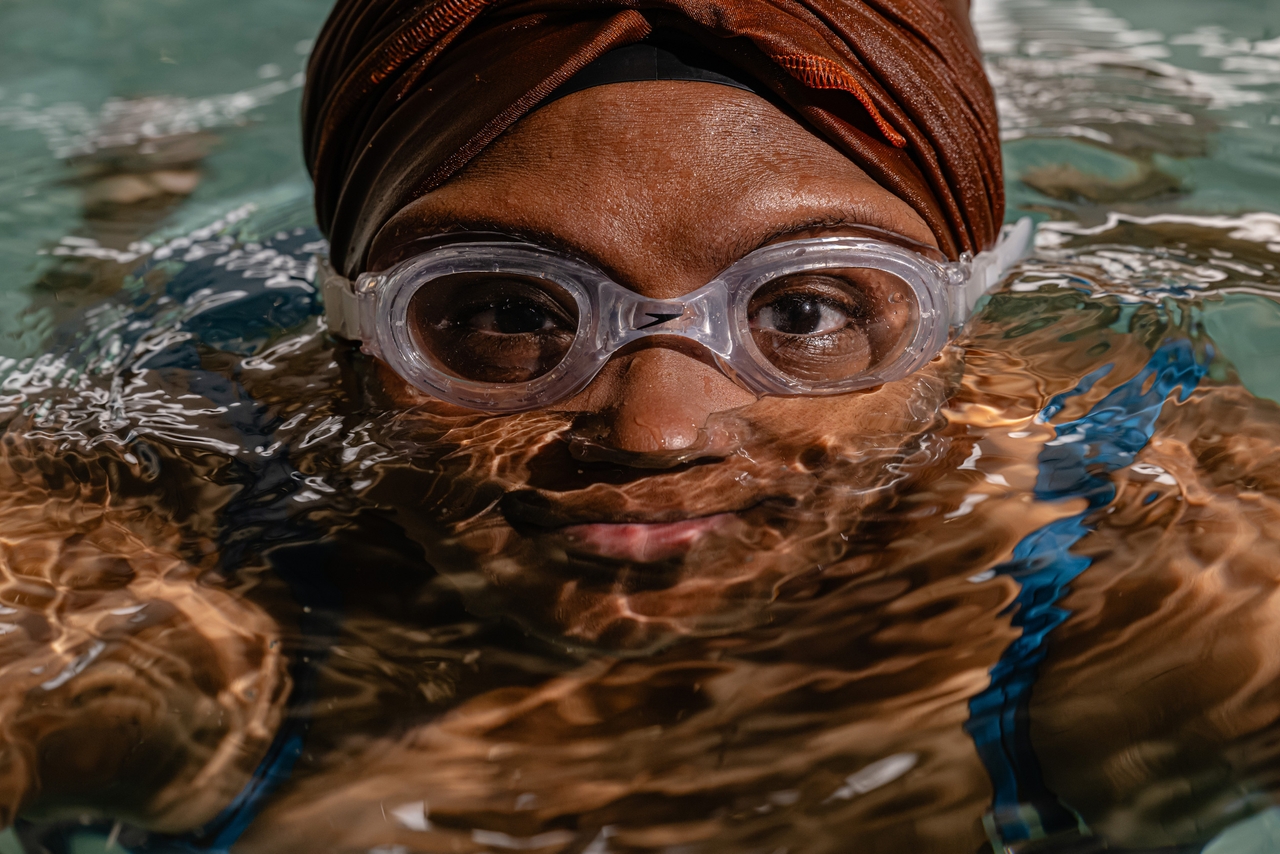
Cold water lapped at my legs as I descended into the shallow end. I joined two women standing before our instructor. For the first half of the class, we did everything but swim. We dipped our faces into the water to get comfortable, opened our eyes, and exhaled through our noses while submerged. With my feet planted, I felt safe and in control. Then, we gripped the pool edges and practiced kicking. To my surprise, it was all in the hips, not the knees. I forced my stiff hips to move my legs up and down, letting my torso sway along.
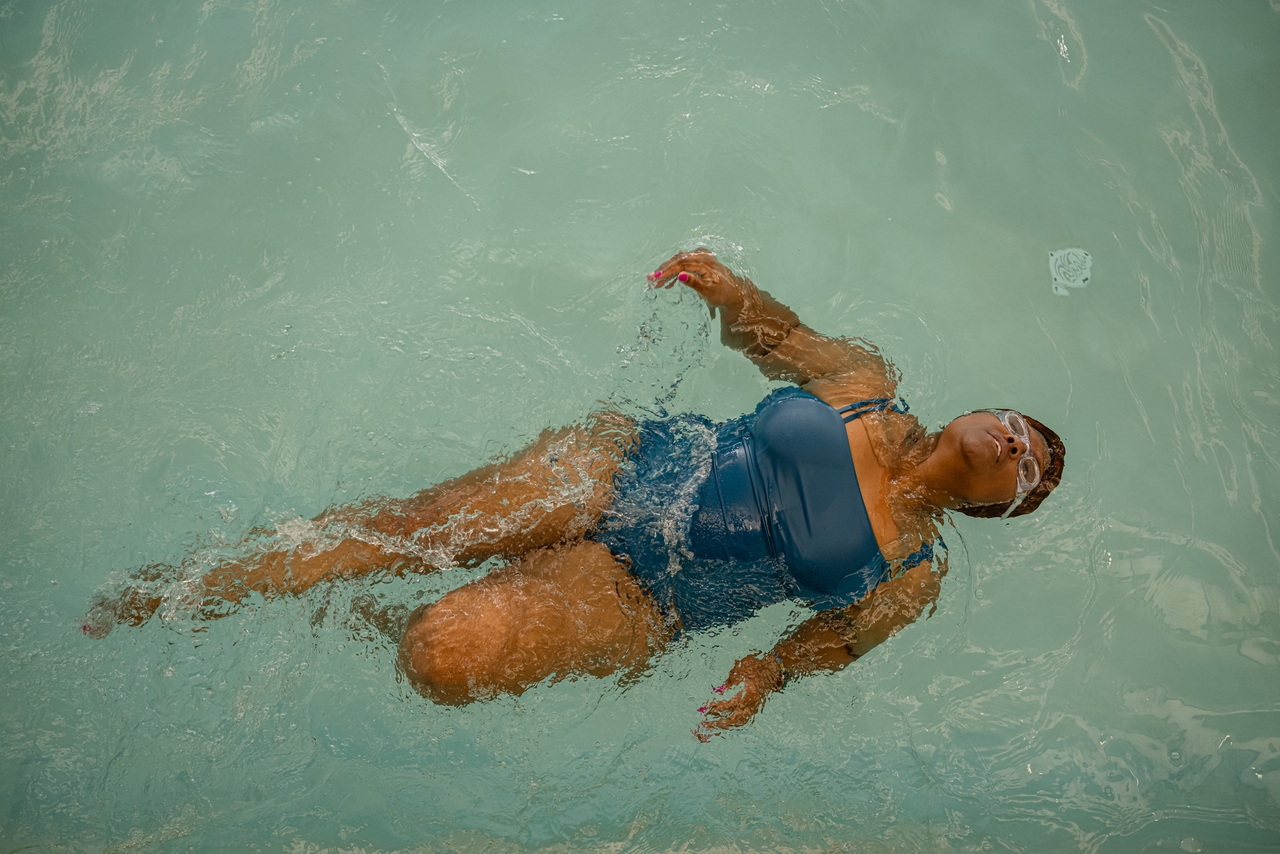
Finally, it was time to move away from the edge. Our teacher explained how to float: Lie back into the water, arch your back, and lift your legs up and out in front of you. Our lungs are filled with air, he explained, so our torsos naturally want to float.
“Your body’s already doing half the work,” he said.
It seemed too simple. Then I realized the hardest part for me: trusting my own body. I had to believe that my body and the water would work together to keep me from drowning. I had to surrender. I lowered myself into the pool until I was horizontal. The noise of the cavernous space condensed to a hum as the water covered my ears. I gazed at the ceiling, noticing its height for the first time. I heard myself take a deep breath.
I was floating. I was free from fear. I knew I would be OK.
I spent the next five Saturdays in that pool, training my body to follow the instructor’s steps to get from one end to the other. I learned to count strokes in my head and coordinate my arms and legs. Though we learned freestyle and breaststroke, I often returned to my favorite: the backstroke.
A year since signing up for those classes, I’ve joined a water aerobics class. Every Friday morning, a group of mostly older Black women bob in the water in swim caps, headscarves, bandanas, and shower caps. We complete moves that work up a sweat even while soaked. I’ve inched closer to the deep end for a more challenging workout.
At the peak of summer, a group of junior lifeguards stood along the wall, waiting for the water aerobics class to finish so they could start training. About 20 minutes in, I glanced behind and saw a group of girls in the shallow side, mimicking our moves. Then the boys joined. By the end of the class, teenagers and adults were clapping and cheering over the dance-hall music blasting from the speaker. We were a community. And in the water, I felt at home.