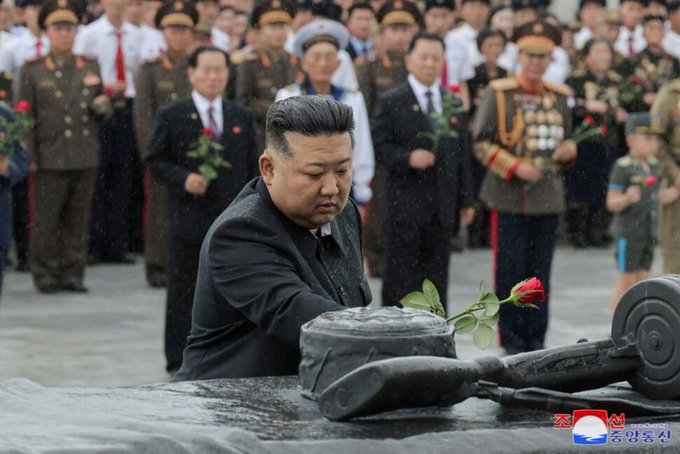
The 71st anniversary of the Korean War, North Korea has issued a stark warning, pledging the “total destruction” of its enemies. The declaration came from a high-ranking official during a state-organized event commemorating the war, highlighting the ongoing tension on the Korean Peninsula.
Escalating Rhetoric
North Korea’s statement marks an intensification of its combative rhetoric. This vow of annihilation underscores the country’s unwavering stance against perceived threats, primarily directed at South Korea and the United States. The official emphasized that North Korea’s military capabilities are prepared to counter any aggression, promising devastating consequences for its adversaries.
Historical Context
The Korean War, which lasted from 1950 to 1953, ended with an armistice rather than a peace treaty, leaving the two Koreas technically still at war. This anniversary serves as a reminder of the unresolved conflict and the fragile state of peace in the region. North Korea often uses such anniversaries to bolster nationalistic fervor and justify its military developments.
International Reactions
The international community has responded with concern to North Korea’s aggressive stance. The United States and South Korea, in particular, have reiterated their commitment to defending against any provocations. Diplomatic efforts aimed at denuclearization and peace have faced significant setbacks, with North Korea’s latest threats further complicating the path to dialogue.
Military Capabilities
North Korea has consistently showcased advancements in its military arsenal, including nuclear weapons and ballistic missiles. The country’s leadership has made it clear that these developments are crucial for its defense strategy. The vow of “total destruction” is a stark reminder of the potential for devastating conflict should diplomatic efforts fail.
Call for Peace
Despite the harsh rhetoric, there are calls within the international community for renewed diplomatic efforts. Experts emphasize the need for dialogue and negotiation to prevent escalation and achieve lasting peace on the Korean Peninsula. The anniversary of the Korean War serves as a somber reminder of the cost of conflict and the imperative to seek peaceful solutions.
North Korea’s vow of “total destruction” on the anniversary of the Korean War underscores the enduring volatility in the region. As tensions remain high, the international community must navigate a delicate balance between deterrence and diplomacy to ensure stability and peace.