

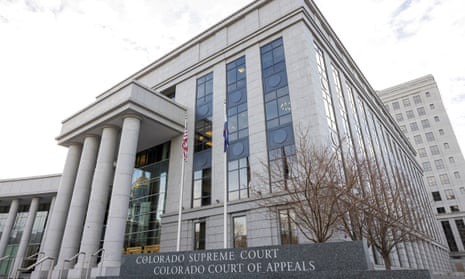
The Colorado Republican Party has escalated the dispute concerning Donald Trump’s eligibility for the state’s presidential ballot by appealing to the U.S. Supreme Court. This move comes after the Colorado Supreme Court ruled to disqualify Trump from the ballot based on a 155-year-old clause in the 14th Amendment.
At the heart of the legal battle lies the interpretation of the 14th Amendment’s clause, which bars individuals who have “engaged in insurrection” from holding office. Republicans argue that Trump has never been formally charged with insurrection, emphasizing this pivotal point in their appeal to the highest court in the land.
Representing Colorado’s GOP, former Trump attorney Jay Sekulow filed a petition urging the U.S. Supreme Court to overturn the state court’s decision. He underlined the significance of the case, asserting, “This is the most important case we have ever taken on because if we lose our right to vote, we lose our constitutional republic.”
The controversy stems from allegations surrounding Trump’s involvement in the Capitol attack of January 6, 2021, an event that the state of Colorado claims triggers the insurrection clause of the 14th Amendment.
The Colorado Supreme Court’s ruling, which marks the first instance of the 14th Amendment being employed to bar a presidential candidate, raises concerns about its potential implications beyond the state borders.
While Colorado’s Electoral College votes might not significantly impact the Republican candidate’s overall electoral chances, the decision could establish a precedent for similar actions in other states.
Louisiana has already witnessed a legal challenge aiming to prevent Trump from appearing on the ballot, drawing connections to the events of January 6, 2021. This legal maneuvering extends beyond Colorado, shaping a broader legal and political battleground.
The crux of the matter revolves around whether Trump’s actions align with the criteria of engaging in insurrection, as delineated in the 14th Amendment.
The Colorado Republican Party contends that Trump’s consistent messaging about election interference and his portrayal as a victim of political targeting should not serve as grounds for disqualification.
Republicans argue that the invocation of the 14th Amendment in this context establishes a perilous precedent, emphasizing that Trump has never faced insurrection charges.
The U.S. Supreme Court’s forthcoming decision on this appeal is anticipated to carry substantial implications for future election-related cases and the interpretation of constitutional clauses.
The legal terrain in this case delves into uncharted territory, as the Supreme Court has not previously ruled explicitly on Section 3 of the 14th Amendment.
Inserted post-Civil War to prevent former Confederates from holding government positions, this clause poses unique questions regarding its applicability to the presidency.
The majority opinion of the Colorado Supreme Court, primarily comprising Democratic-appointed justices, introduces added complexity to the ongoing legal challenge.
The appeal lodged by Colorado Republicans ensures the continuation of the legal battle, postponing a definitive decision until January 4 or until the U.S. Supreme Court concludes its review.
Although the immediate impact on Trump’s campaign in Colorado might be restricted, the potential for other courts or election authorities to follow suit in pivotal states remains a looming possibility.
This legal wrangle underscores the convergence of constitutional interpretation, political narratives, and the evolving landscape of election laws, marking a critical crossroads in American jurisprudence.


