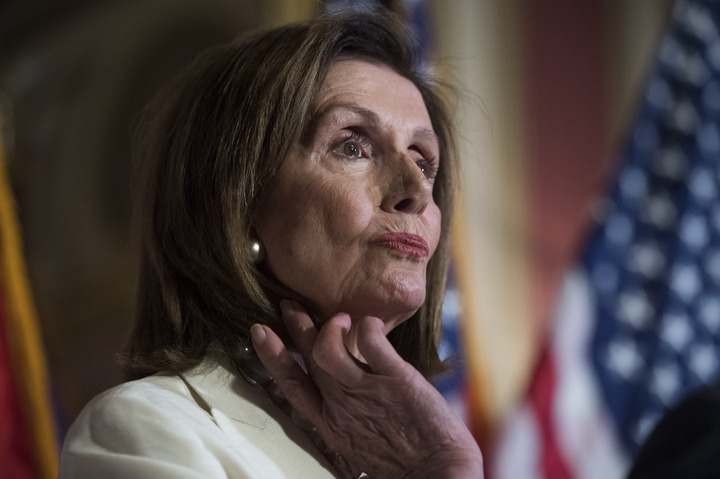
Former House Speaker Nancy Pelosi (D-Calif.) recently made headlines with her critique of the term “weird” used to describe Republicans, deeming it far too mild for the current political climate. In an interview with MSNBC’s Lawrence O’Donnell on August 7, 2024, Pelosi expressed frustration with the way Democrats have been characterizing their GOP opponents.
Pelosi’s dissatisfaction with the term “weird” underscores her belief that it doesn’t capture the gravity of her concerns about Republican policies and actions. “I think it’s too generous. I think they’re much worse than weird,” Pelosi said, indicating that the term fails to convey the seriousness of her objections.
Despite her reservations, Pelosi acknowledged the term’s effectiveness in connecting with the public. She noted that “weird” resonates with voters, even if it doesn’t fully reflect her perspective. The term gained popularity after Minnesota Governor Tim Walz (D) used it during a July interview while supporting Vice President Kamala Harris. Walz’s remarks, criticizing Republicans for their stances on issues like book bans and personal freedoms, quickly gained traction, particularly among younger voters.
Pelosi praised Walz for his rhetorical prowess and the term’s viral success. “It went viral and that’s what kind of took him into the younger world,” she said, highlighting how it boosted Walz’s profile. His ability to engage with younger and moderate voters has positioned him as a rising star within the Democratic Party.
However, the GOP has strongly criticized Walz’s comments. The Trump campaign and other Republican figures have dismissed Walz as a “West Coast wannabe” and rejected his critique as out of touch with mainstream America. This backlash highlights the increasing tensions between the parties as the election cycle heats up.
Pelosi’s comments reflect a broader Democratic strategy to resonate with diverse voter segments while emphasizing what they view as the dangers posed by the Republican agenda. As the political discourse intensifies, Pelosi’s critique and the term “weird” will likely continue to spark debate and influence the narrative leading into the upcoming elections.
Both parties are refining their rhetorical strategies to shape public perception and energize their bases. Whether “weird” will remain a key term in Democratic rhetoric or evolve into something more impactful is yet to be seen, but it’s clear that the language of politics will play a crucial role in the election’s outcome.