

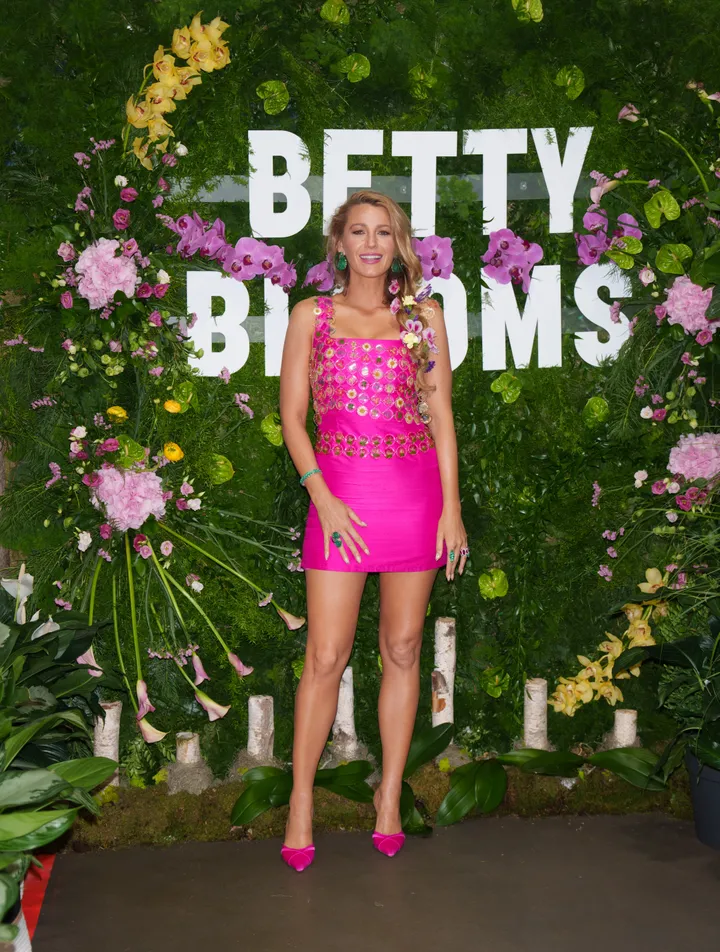
Blake Lively is facing intense backlash over her promotional approach for the film It Ends With Us. The actor’s handling of the press tour has sparked outrage, with critics arguing that her upbeat and seemingly lighthearted demeanor contrasts sharply with the film’s serious subject matter: domestic violence.
The movie, based on Colleen Hoover’s novel, follows Lily Blossom Bloom (played by Lively), a flower shop owner who escapes an abusive relationship while navigating a complex love triangle. Despite the novel’s controversial reception for allegedly romanticizing abuse, Lively’s promotional efforts have been criticized for their insensitivity.
Instead of addressing the film’s critical themes, Lively has chosen to promote It Ends With Us with a focus on its floral elements and personal brand. Her social media presence is filled with posts about her sparkling beverage company, Betty Buzz, and her hair care line. One promotional video even features Lively enthusiastically showcasing a miniature replica of her character’s flower shop.
Perhaps the most striking instance of this disconnect came on the film’s official TikTok account. In a post where Lively, alongside Hoover, encourages viewers to see the film with a casual invitation to “grab your friends, wear your florals,” the contrast between the film’s theme and the promotion left many feeling uneasy.
Lively’s fashion choices during the tour, predominantly floral prints, and the involvement of her husband, Ryan Reynolds, have also drawn criticism. Reynolds has been heavily featured in the promotional activities, even conducting an interview with Lively’s co-star Brandon Sklenar that focused on Sklenar’s physical appearance. Additionally, Reynolds reportedly contributed to writing a key scene in the film, which surprised the actual screenwriter, Christy Hall.
While Lively’s approach has been criticized, her co-star, Justin Baldoni, who directed the film and plays the abusive partner, has taken a different route. Baldoni has used his platform to address the real-life issue of domestic violence and support related nonprofits, such as No More. His focus on the film’s message contrasts sharply with Lively’s promotional tactics.
The backlash has been palpable on social media, with users expressing their frustration over Lively’s perceived tone-deafness. Critics argue that her focus on fashion and personal brand promotion undermines the film’s serious subject matter. Some have even accused her of using the film as a vehicle for self-promotion rather than addressing its important themes.
In response to the criticism, Lively did share an Instagram story featuring a domestic violence hotline number and mentioned the film’s focus on not just survival but strength. However, many feel these gestures are insufficient given the earlier tone of her promotional activities.
The stark difference between Lively’s promotional strategy and the film’s serious content has ignited a debate about responsibility and sensitivity in celebrity endorsements of socially significant topics. As the discussion continues, many are left questioning whether the film’s message is being overshadowed by the promotional choices made by its star.


