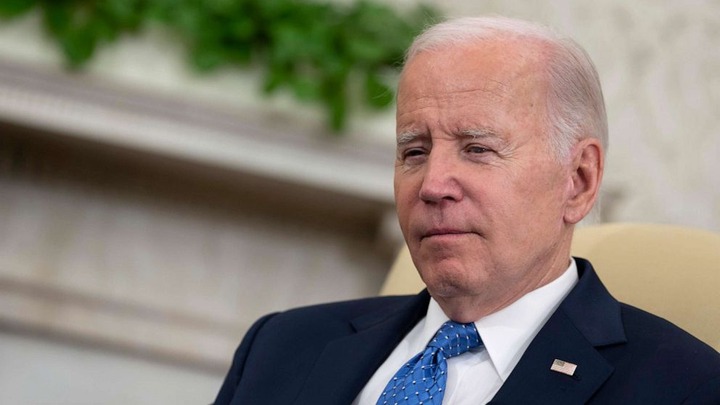
On Monday, President Joe Biden took aim at the prevailing public sentiment regarding the U.S. economy, expressing his frustration with what he deems as a distorted portrayal in the media. Facing a decline in approval ratings, particularly concerning inflation management, the President urged reporters to accurately reflect the economic landscape during a brief interaction before boarding the presidential helicopter.
Despite the administration’s persistent efforts to mitigate the economic fallout from the COVID-19 recession, President Biden finds himself grappling with a disconnect between positive macroeconomic indicators and public dissatisfaction.
As of November, the U.S. unemployment rate stood at 3.7 percent, indicating a robust recovery that hovers just above the pre-pandemic level of 3.5 percent. Furthermore, annual inflation has receded from its June 2022 peak of 9.1 percent to 3.1 percent in November.
However, these optimistic statistics are seemingly eclipsed by growing discontent among Americans, contributing to a record-low approval rating of 34 percent for President Biden, as reported by a recent Monmouth University poll.
A substantial factor in this decline is the public’s dissatisfaction with the President’s handling of inflation, with nearly 70 percent of respondents expressing disapproval.
President Biden’s frustration underscores the challenge of bridging the gap between macroeconomic data and individual experiences. Despite statistical evidence of a resilient recovery, everyday Americans grappling with tangible effects of inflation may harbor a contrasting perception.
The President’s call for fair reporting seeks to address this dissonance, emphasizing the need for a more accurate portrayal aligned with positive economic indicators.
With an eye on the 2024 elections, President Biden faces the dual challenge of steering economic recovery and effectively communicating successes while acknowledging challenges.
The President’s expressed frustration signals a recognition of the uphill battle in aligning the administration’s narrative with the lived experiences of the American people.
As the months unfold, it remains to be seen how President Biden’s call for fair reporting resonates with both the media and the public. Whether this frustration translates into a recalibration of messaging and policies to address inflation concerns could significantly shape the trajectory of the Biden administration and public perception of the U.S. economy.