

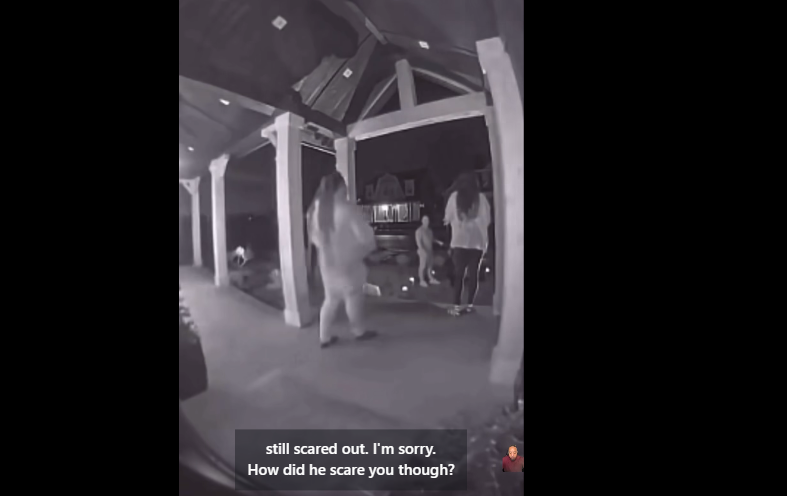
Viral video, Ohio real estate developer DaMichael Jenkins has shed light on an alarming racial profiling incident involving his neighbor, Michelle Bishop. The video, posted by Jenkins himself, shows a tense confrontation where Bishop, with her two children, questions whether Jenkins lives in his own home, dismissing his affirmative answer with the words, “I don’t believe you.” What followed was an escalating situation that has now sparked a widespread conversation about implicit bias and racial profiling.
The incident took place in Jenkins’ driveway in Columbus, Ohio. According to Jenkins, he had been slowly driving through his neighborhood, admiring the Christmas lights, when he pulled into his driveway. That’s when Bishop approached him and demanded to know if he was a resident. When Jenkins confirmed that he lived there, Bishop expressed disbelief, claiming, “I don’t believe you.”
What transpired next was a situation that left many questioning the underlying assumptions of racial bias. As Jenkins remained calm, Bishop fled with her children, calling for help and alleging that Jenkins was chasing her. In the video, Jenkins explains that he had been admiring the decorations and driving slowly, but Bishop’s reaction seemed to be driven by fear and racial prejudice.
“I don’t believe you live here,” Bishop is heard saying in the video. She later attempted to justify her actions, stating, “You have to understand my point of view, being by myself with two kids. I saw a car coming, and I was like, ‘Oh, it scared me!’”
However, many critics argue that Bishop’s fears were rooted in racial stereotypes, questioning Jenkins’ presence in a predominantly white neighborhood. Jenkins himself expressed frustration, emphasizing that this was not just about him but about how people of color are frequently questioned in spaces they belong to.
“This isn’t just about me. This is about how people of color are often treated in spaces they rightfully belong to,” Jenkins said in a follow-up statement. “I was in my own driveway, and I was made to feel like an intruder.”
The video has ignited a nationwide conversation about racial profiling and the subtle ways in which implicit bias can manifest in everyday interactions. Social media has exploded with comments of support for Jenkins, with many condemning Bishop’s actions.
“This is unacceptable. DaMichael Jenkins shouldn’t have to justify his presence in his own driveway. Racial profiling has no place in our society,” one Twitter user wrote.
Another person shared, “This is a classic example of implicit bias. People need to confront their prejudices and stop making baseless assumptions.”
Despite the backlash, Bishop has defended her actions, claiming she was simply frightened for her children’s safety. “I didn’t know who you were, and I panicked,” she said in the video, suggesting that her reaction was based on fear rather than racial prejudice.
However, many have pointed out that her fear should not have resulted in racial profiling. Critics argue that if Bishop felt unsafe, she could have contacted authorities instead of making assumptions about Jenkins’ presence in the neighborhood.
The incident serves as a poignant reminder of the ongoing issue of racial profiling, which often occurs in everyday situations—whether in a store, a workplace, or even in one’s own neighborhood. It highlights how deeply ingrained racial stereotypes can affect people’s perceptions and actions, leading to unjust situations like this one.
In response to the backlash, local community leaders have called for education on implicit bias and racism. Activists in Columbus are using this incident to fuel discussions about racial awareness and the need for better understanding of the challenges faced by marginalized communities.
Jenkins, in sharing the video, emphasized that his goal was not to incite anger but to spark a meaningful conversation about race and bias. He urged others to reflect on their own biases and work towards creating more inclusive communities.
“I hope this incident serves as a wake-up call,” Jenkins said. “We need to address these issues head-on, not just for me but for everyone who’s been in a similar situation.”
As the video continues to circulate, it is clear that this incident has struck a chord with many, bringing issues of race and profiling to the forefront. Whether it’s about the actions of one neighbor or the larger societal implications of racial bias, this moment serves as an important opportunity to reflect on how we can build a more equitable and understanding society.
This is more than just a confrontation in a driveway—it’s a call for all of us to confront our biases, understand each other’s perspectives, and ensure that no one is made to feel like an outsider in their own home.


