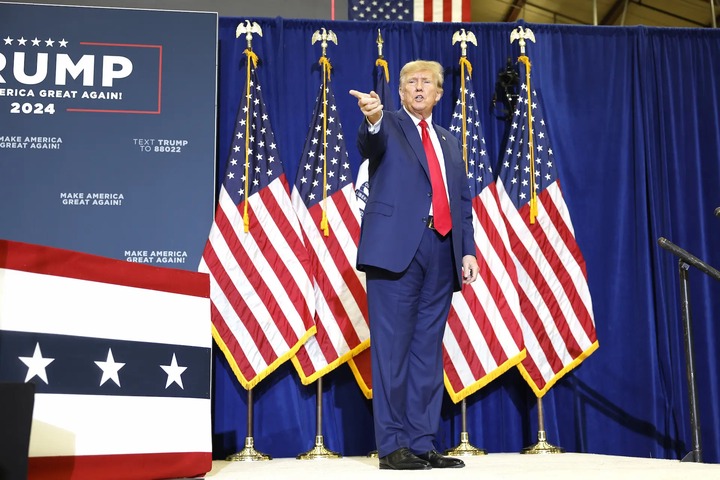
Capitol Hill finds itself ensnared in the extensive influence of Donald Trump’s shadow presidency, disrupting bipartisan negotiations and compelling Republicans to delicately navigate the fine line between party loyalty and effective governance.
As reported by The Messenger on Friday, January 19, 2024, the recent clash between Trump’s directives and ongoing discussions regarding a comprehensive border bill underscores the challenges faced by congressional Republicans striving for legislative progress while accommodating the wishes of their former leader.
While the backdrop of these deliberations is the aftermath of a fierce conflict in the Gaza Strip, attention has shifted to the intricate dance involving Republicans, Democrats, and Trump’s online directives.
Senate Minority Leader Mitch McConnell openly acknowledged the unique challenges, stating, “If we had a 100% Republican government, president, House, Senate, we probably would not be able to get a single Democratic vote.” This acknowledgment underscores the delicate nature of the negotiations and the imperative for bipartisan support.
Senator J.D. Vance, a supporter of Trump’s 2024 campaign, sees Trump’s involvement as a call for unity within the party but voices reservations about concessions made to Democrats in ongoing talks, particularly regarding border enforcement provisions. Vance insists that any deal lacking substantial progress on parole authority is a non-starter for him.
Senator Roger Marshall views the negotiations as a “once-in-a-generation opportunity to get something done” and emphasizes securing the border as his top priority. Senator Mike Braun echoes Trump’s advice to Senator Ron Johnson, cautioning against falling for a subpar deal.
Despite the urgency felt by Republicans, the impact of Trump’s directives creates a complex system. House and Senate Republicans, eager to implement measures to gain control of the border, face hurdles in the form of Trump’s stringent conditions.
House Minority Leader Hakeem Jeffries criticizes House Republicans for seemingly taking orders from Trump, highlighting a perceived lack of autonomy within the party. He contends that the Republican Party has become synonymous with Donald Trump, expressing concern over the party’s reluctance to break from what he views as Trump’s extreme positions.
Trump’s insistence on a flawless deal, conveyed through online posts, adds pressure on negotiators. “Mike Johnson will only make a deal that is perfect on the border,” Trump assured his most devoted followers.
Senator Bill Cassidy expresses frustration with this approach, emphasizing the urgency of addressing the influx of people at the southern border. Despite the challenges, he advocates for a pragmatic approach to tackle the ongoing crisis.
The difficulty for congressional Republicans lies in striking a balance between loyalty to Trump and the imperative to make legislative progress. Trump’s influence, wielded through social media directives, demands strict adherence to his vision. However, some Republicans, such as Senator John Cornyn, recognize the need for progress and caution against turning down opportunities for bipartisan cooperation.
Senator Mitt Romney remains skeptical of Trump’s input, emphasizing the importance of solving problems rather than creating political strife. “We’ve got to solve a problem, not just create politics,” he stated, highlighting the potential consequences of rejecting compromise.
Senate GOP Whip John Thune, second in command to Senate Majority Leader Mitch McConnell, acknowledged the challenges, stating, “It’s not helpful,” when asked about Trump demanding total acquiescence from any border deal in an interview with CNN.