

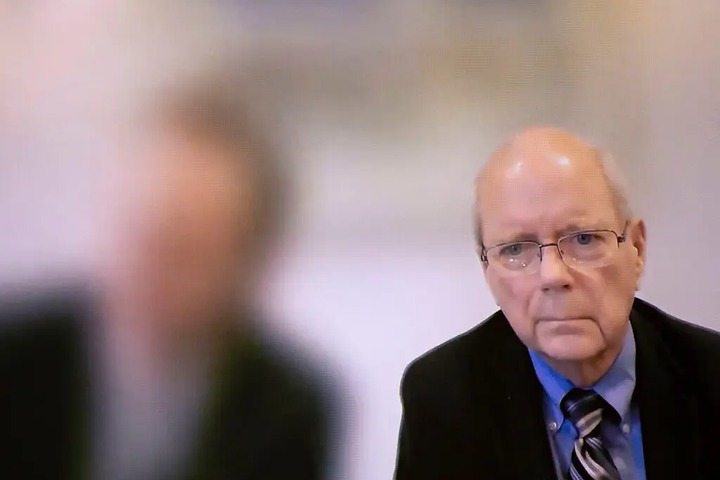
A former state trooper and Republican volunteer, James Renner, expressed profound regret for his participation as a fake elector in Michigan during the 2020 election, as reported by The Hill on Wednesday.
Renner, 77, stood as the singular Trump elector cooperating with Michigan Attorney General Dana Nessel’s office following charges against all 16 fake Trump electors in July. Notably, charges against Renner were dismissed in October as part of his cooperation agreement.
In an exclusive interview with investigators, Renner disclosed his unwitting involvement in a scenario contradicting the legitimate electoral process, leading to a revelation of regret. He admitted realization of the impropriety of his actions after reviewing House investigation testimony regarding the January 6, 2021, Capitol attack.
“I can’t overemphasize how upset I was that the legitimate process had not been followed,” Renner confessed. “I felt that I had been walked into a situation that I shouldn’t have ever been involved in.”
This development illuminates the intricate legal aftermath of the 2020 election, where charges against fake electors have been filed in multiple states, including Georgia, Michigan, and Nevada.
In Georgia, prosecutors expanded their scope, charging former President Trump and key allies for efforts to maintain power despite the 2020 loss. Meanwhile, in Michigan, AG Nessel, a Democrat, has solely charged the electors, keeping the investigation open.
Renner’s interview revealed inquiries about involvement from other figures such as Shawn Flynn and Rudolph W. Giuliani, although legal exposure in Michigan for them, or Trump himself, remains uncertain.
The Detroit News recently reported a tape of Trump pressuring Wayne County Board of Canvassers members in December 2020, providing direct evidence of his attempts to overturn the Michigan vote.
Renner’s background as a former state trooper and local party activist adds complexity to his involvement. Initially contacted as a last-minute substitute, Renner, unfamiliar with the electoral process, found himself in the state Republican headquarters’ basement amid the pandemic-related closure of the Capitol.
Renner’s case highlighted the chaotic nature of the Trump electors’ meeting. Testimony from Laura Cox, former chairwoman of the state Republican Party, revealed drafted language specifying a contingency basis that was ultimately excluded.
The ongoing investigation, as pretrial hearings extend into February, underscores the enduring legal implications of Michigan’s previous presidential election, with the state’s presidential primary scheduled for February 27.
In his emotional interview, Renner declared, “I am very upset, I don’t show it, but I am,” highlighting feelings of betrayal.
The intricate details emerging from Renner’s case offer insights into the intricacies of electoral processes and the repercussions following unprecedented events.


