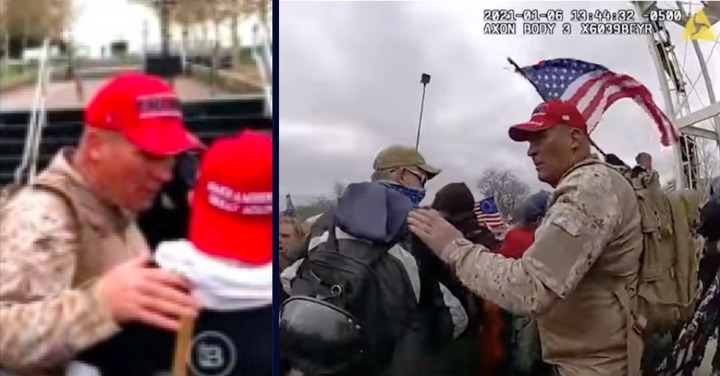
A recent report released by Law and Crime on January 3, 2024, revealed ongoing developments stemming from the January 6 Capitol riot, as federal prosecutors pursue maximum penalties for James Ray Epps Sr., a fervent Trump supporter ensnared in a discredited conspiracy alleging his involvement as an FBI operative.
This particular case underscores the intricate challenges in prosecuting riot-involved individuals and maneuvering amidst pervasive falsehoods.
At 62 years old and hailing from Arizona, James Ray Epps Sr. became a focal point of an unsubstantiated right-wing theory falsely asserting his role as an FBI informant orchestrating the events of January 6.
Despite his admission of guilt for disorderly conduct during the Capitol unrest, Epps faces an unexpected turn in legal proceedings, with prosecutors now advocating for the severest punishment.
In a sentencing memorandum submitted on Tuesday, federal prosecutors acknowledged the exceptional nature of Epps’ case, highlighting “distinctive and compelling mitigating factors” that prompted a pre-indictment plea to a misdemeanor charge.
While acknowledging Epps’ involvement in the riot, the prosecution underscores circumstances setting his case apart.
The memorandum sheds light on Epps’ embrace of conspiracy theories, citing his attribution of the January 6 violence to undercover Antifa members masquerading as supporters of Trump.
Despite these revelations, prosecutors are advocating for a six-month jail term followed by a year of supervised release, accompanied by a $500 restitution payment for Capitol damages.
In response, Epps, via his filing, requests solely a probationary sentence. His defense emphasizes the onslaught of attacks and defamation he has faced, arguing that his actions on that day do not merit incarceration.
The sentencing memo notes, “Ironically, given the conspiracy theory surrounding him, Epps repeatedly attributed the violence that occurred on January 6 to undercover members of Antifa posing as Trump supporters and inciting others to hijack a righteous peaceful protest.”
The defense underscores the substantial shift in the government’s stance, from initially opting against prosecution to now advocating for imprisonment.
Epps’ case exposes the intricacies involved in prosecuting Capitol riot participants, particularly when unfounded narratives and conspiracies influence proceedings.
Despite his admission of guilt, Epps persists in propagating baseless rumors about the rioters, perpetuating the groundless belief in his purported role as an FBI plant.
Acknowledging Epps as both a target and a victim, the government grapples with the delicate balance in the pursuit of justice.