In a groundbreaking move with far-reaching implications, the Supreme Court has taken on the pivotal task of determining the eligibility of former President Donald Trump to feature on Colorado’s ballot, a decision that experts are calling “monumental” for the democratic process.
The legal saga unfolds from a recent ruling by Colorado’s highest court, asserting that Trump’s alleged engagement in insurrection renders him ineligible for participation in the state’s GOP primary ballot. Central to this legal battle is Section 3 of the 14th Amendment to the U.S. Constitution, designed to bar individuals who have “engaged in insurrection or rebellion” from holding political office.
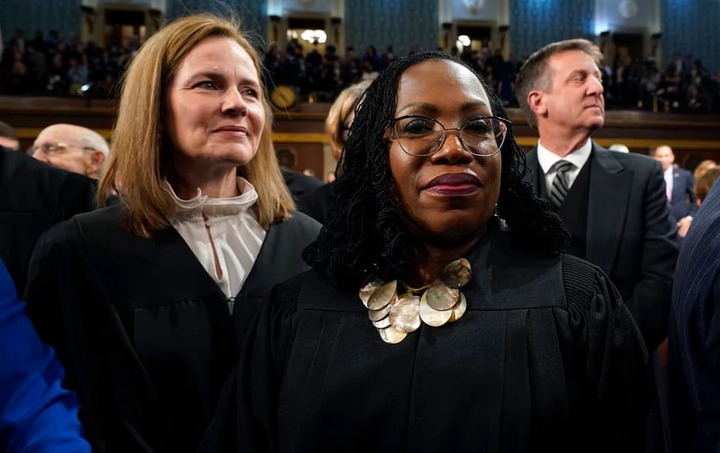
Ketanji Brown Jackson, associate justice of the US Supreme Court, has taken center stage in the proceedings. This marks the first significant application of this constitutional provision since the Civil War, signifying the gravity of the case at hand.
Derek Muller, an election law scholar from Notre Dame, rates the case’s potential impact as a perfect 10 on a scale from 1 to 10, underscoring its unprecedented nature. While Muller acknowledges the speculative nature of predicting the court’s decision, he emphasizes the extraordinary circumstances surrounding the Colorado Supreme Court’s ruling and the possibility of its reversal, allowing Trump back on the ballot.
However, Muller also delves into the risks faced by the Supreme Court, particularly the looming specter of perceived partisanship. Legal scholar Michael W. McConnell expresses concern over potential accusations of bias, given the binary nature of the decision that either empowers the Republican candidate or denies voters the opportunity to choose him.
Muller suggests that achieving a consensus view within the court is essential to mitigate accusations of partisanship, highlighting the importance of presenting a united front to the public.
A noteworthy development is the Supreme Court’s decision to exclusively consider Trump’s appeal, excluding the Colorado Republican Party’s appeal. Muller interprets this as a strategic move to streamline the process and avoid unnecessary complexity.
While the court’s decision will undoubtedly impact the Colorado case, uncertainty looms over its broader implications for ballot access in other states. Muller points out that the court may opt for a narrow ruling, applicable only to the Colorado case or the primaries, leaving unanswered questions for other states grappling with similar challenges.
With oral arguments scheduled for February 8, 2024, the court faces a relatively short timeline for resolution. Muller anticipates a comprehensive resolution to provide clarity before the intensification of the upcoming election season.
In the interim, the article sheds light on the potential consequences of the ongoing uncertainty for the Trump campaign and voters nationwide. As more states confront similar challenges with approaching ballot deadlines, voters find themselves in a state of flux regarding the eligibility of certain candidates.
The Supreme Court’s decision to review Trump’s eligibility for the Colorado ballot transcends the immediate legal context, carrying profound implications for the democratic landscape. As the legal proceedings unfold, the court navigates challenges in addressing potential perceptions of partisanship while grappling with the unprecedented constitutional questions posed by this case. The ultimate outcome will not only shape the trajectory of the 2024 election but also set a precedent for future interpretations of the 14th Amendment.